Steel is the foundation of modern industry, powering everything from heavy machinery to high-precision engineering applications. However, even minor defects in steel can lead to catastrophic failures. Industrial steel quality inspection ensures that materials meet rigorous safety, durability, and regulatory standards.
In this article, we will explore steel quality inspection and provide you with practical tips on how to conduct effective steel quality control.
Content
What is Steel Quality Control Inspection?
Steel quality control inspection a systematic evaluation including material inspections (verifying certified mill test reports and grades), fit-up and weld inspections (checking weld sizes, lengths, and detecting any defects via methods like visual inspection or NDT), dimensional checks of fabricated pieces against drawings, and a final inspection of coating and overall assembly before delivery.
Buying steel products can be challenging due to fraudulent companies and risks of sourcing items with incorrect dimensions, mechanical properties, and poor surfaces, which makes quality control especially important for businesses in the construction industry.
Read How to Import Steel from China: https://www.gis-inspection.com/post/how-to-import-steel-from-china
Key Benefits of Steel Quality Control Inspection
“WASHINGTON, D.C. – The American Iron and Steel Institute (AISI) reported today that for the full year 2025 steel shipments were 91,158,528 up 5.1 percent from the 86,698,917 shipped for full year 2024. Shipments were revised to reflect category consolidations and additional updates.
Sources: https://www.steel.org/
The ever-increasing demand for steel is placing increasingly higher demands on quality control. Complete quality control is essential, particularly for power plants, offshore wind farms and extensive infrastructure projects. The increasing demands on precision and safety require a high level of technical expertise and systematic control.
Below are the key benefits:
- Safety Assurance: Defective steel in critical applications can lead to catastrophic failures.
- Cost Efficiency: Early defect detection reduces scrap rates and rework costs.
- Regulatory Compliance: Mandatory adherence to standards like ASTM, ISO, or EN avoids legal penalties and ensures market access.
- Performance Optimization: Verifying mechanical properties ensures suitability for intended use.
Steel quality control isn't a cost - it's the systematic approach that catches issues early, ensures components are built to spec and delivers fabrication that performs as customer requirement.
4 Types of Steel Quality Control Inspection
Quality control isn't a single checkpoint - it's a process that runs through every stage of your project:
1. Pre-Production Inspections for Steel
Pre-fabrication Before any cutting or welding starts, quality fabricators verify specifications, confirm material availability, review drawings and identify potential issues. This is where problems get caught cheaply.
2. During Production Inspection for Steel
During fabrication Throughout the fabrication process, components are checked against specifications. Dimensions are verified, welds are inspected and materials are confirmed. This continuous checking prevents errors from compounding.
3. Pre-shipment Inspection for Steel
Pre-shipment inspection (PSI) for steel is a critical quality control step conducted before the products are shipped to ensure they meet all specified requirements, standards, and customer expectations. It helps buyers verify product quality, quantity, and compliance, reducing the risk of defects and costly issues after delivery.
4. Container Loading Supervision
A comprehensive container loading supervision for steel typically includes: container condition check, product verification, packaging inspection, loading process supervision, securing & lashing check, container sealing. It ensures that steel products are properly handled, securely loaded, and safely transported.
Steel Quality Inspection and Quality Control Checklist
1. Quantity Verification
Confirm that the total quantity matches the purchase order and packing list.
2. Visual Inspection
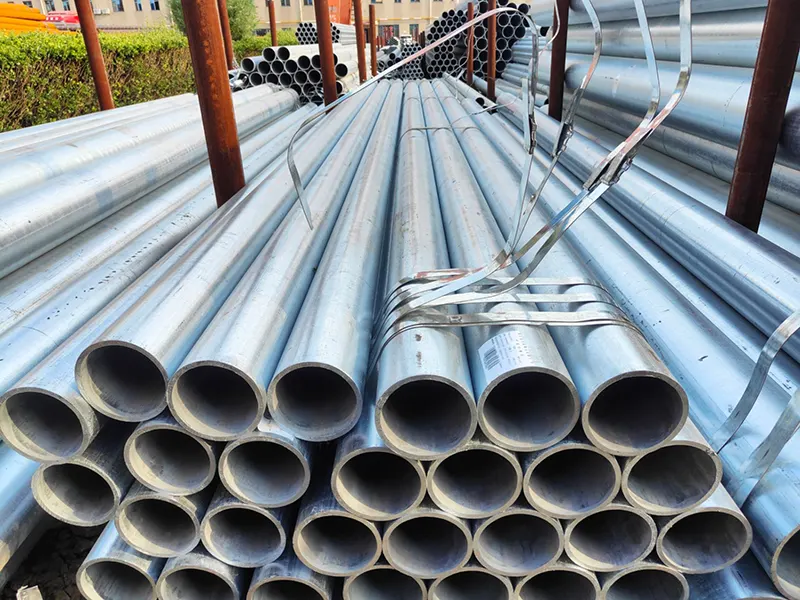
Conduct a visual inspection of the steel surface to identify any obvious defects. This inspection includes:
- Checking for cracks, rust, pitting, dents, or other surface irregularities.
- Inspecting for welding defects and the integrity of coatings.
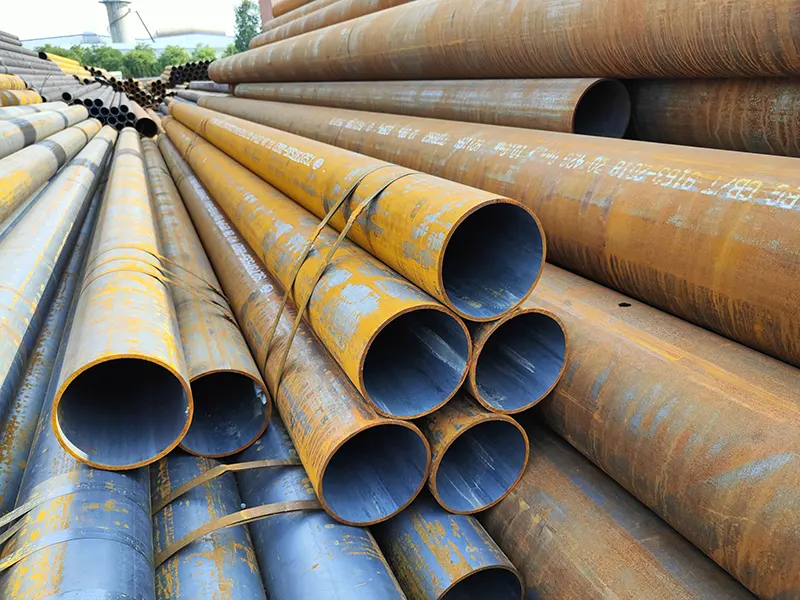
Bulk goods placed outdoors have natural rust marks
3. Dimensional Measurement
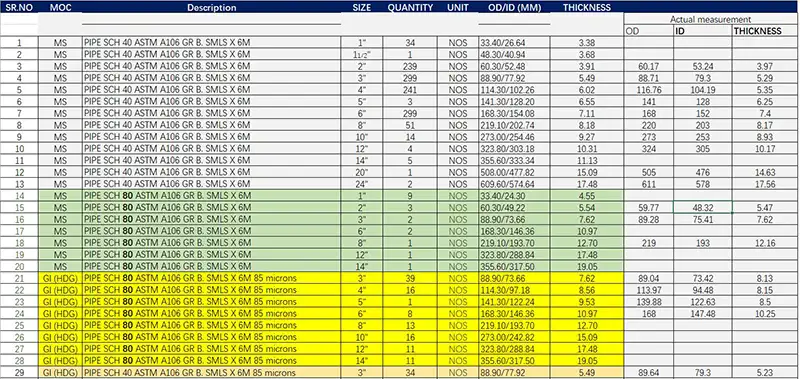
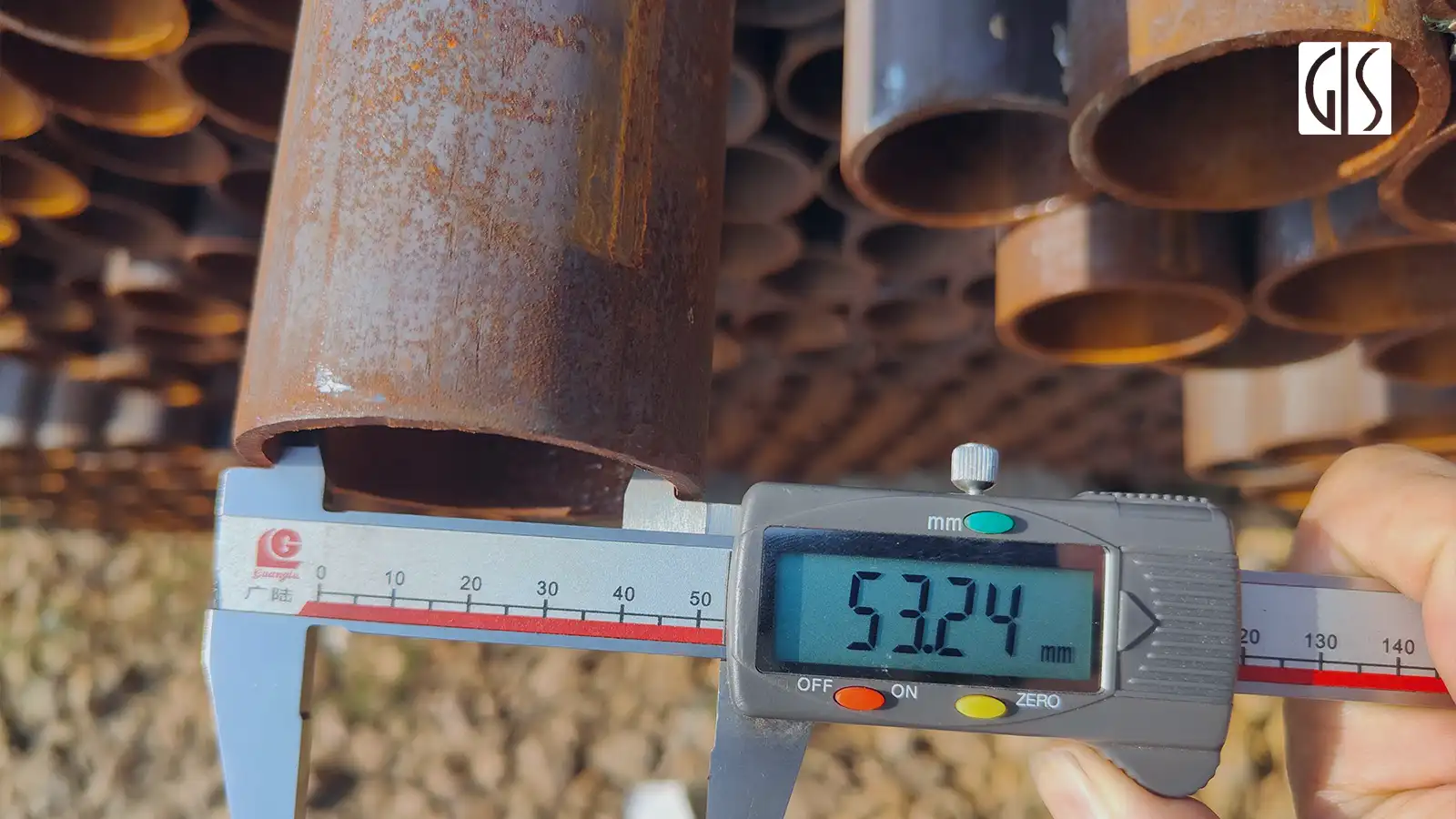
Use precise measuring tools (such as calipers, micrometers, and gauges) to strictly measure the dimensions of the steel. This includes:
- Fundamental dimensions such as length, width, and thickness.
- Checking the geometric shape of components (such as angles and curvature).
4. Mechanical Performance Testing
Conduct on-site tests to evaluate the mechanical properties of the steel, commonly including:
Tension Test on Steel
Test for tension is a method used to measure the amount of tension, yield strength, and ductility in the steel. The strength of the material is tested to ensure its ability to withstand external forces without breaking.
Ductility Testing on Steel
The ductility of a material is indicated by the amount of deformation that’s possible until it breaks. The strength, elasticity and toughness of steel are determined by the amount and rate that it can deform under tensile stress.
Compression Test on Steel
Compression tests are performed on small cylinders, blocks or strips to determine the ability of the material and whether it can undergo large plastic deformations and its limits. Samples are placed between pressure plates and compressed.
Fatigue Test on Steel
The fatigue test is used to determine the behavior of the materials when subjected to reparations of fluctuating loads. It is used to simulate stress conditions that’ll be developed in materials under normal service conditions.
Impact Testing of Steel
Impact tests are used to indicate the behavior of the steel when subjected to high rates of loading, usually bending, tension or torsion.
Wear Resistance Test on Steel
Wear resistance is a complex test and usually applied to specific equipment designed to simulate actual service conditions.
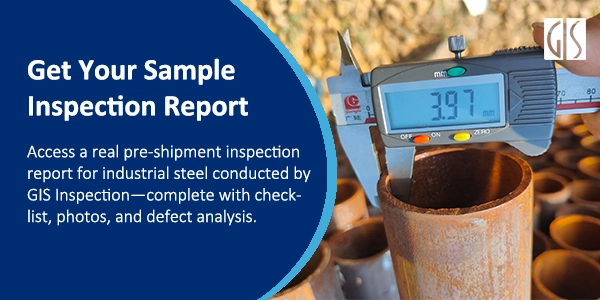
Systematically record all testing data, results during the inspection process, and information on any non-conforming items. Upon completion of the inspection, all the records are compiled into an inspection report and deliver to the client.
Why Choose General Inspection Services (GIS Inspection)
General Inspection Services (GIS) is a leading quality control company with years of experience in various industrial sectors. We provide quality control inspection services to both manufacturers and importers a wide range of steels products including all kinds of metal parts – steel bars, steel coils, steel bars, steel flanges, steel tubes and more.
- A Trusted Quality Partner in China and Asia: With over 20 years of experience in third-party quality inspection, GIS Inspection supports global steel buyers in managing supply chain risks throughout China and Asia.
- Fully Accredited & Recognized: GIS Inspection is fully accredited and certified, including, CNAS ISO/IEC 17020, AQSIQ Accreditation, CMA Certification, ISO 9001 Quality Management System. GIS inspectors also have relevant professional licenses to provide customers with independent, impartial and professional inspection services.
- Fast and Reliable Reporting: All inspection reports are delivered within 24 hours after the inspection, including clear photos, detailed findings, test results, and professional conclusions—allowing clients to make informed decisions without delay.
Ready to work with a third-party quality control inspection services agency who takes quality control seriously? Get in touch with General Inspection Services (GIS) Specialists. We'll understand your project, customer a detailed checklist, and provide a competitive quote. Contact us today for a consultation.
GIS Inspection
GIS Inspection (General Inspection Services), established in 2005 and headquartered in China, is an CNAS 17020, ISO 9001, and AQSIQ accredited third-party agency. We specialize in comprehensive quality control inspection and supply chain solutions for global buyers. By deploying a dedicated team of 100% full-time professional inspectors, GIS Inspection ensures peak integrity and technical consistency. Today, we are the trusted quality partner for over 12,000 global brands.
Email: lisaliu@gis-inspection.com