
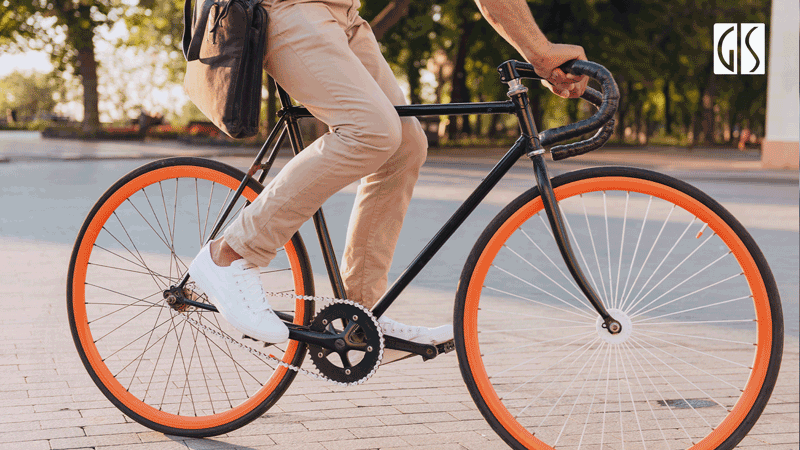
Safety is the major concern for bike importers, even long after their products hit the market. The most effective way to mitigate risk is through pre-shipment quality control (QC) inspections. By identifying potential hazards before the goods leave the factory, importers can protect both their customers and their brand reputation.
Professional third-party inspection companies act as the front line of defense. By adhering to international safety regulations (such as ISO or CPSC standards), these experts conduct rigorous testing to ensure every batch meets specific requirements, including assembly, braking, protrusions, structural integrity, reflectors and more.
Content
What is Bike Quality Inspection?
Bike Quality Inspection is a comprehensive process of checking bicycles for workmanship & aesthetics, structure & suability, visual & functional, performance, safety, and compliance to ensure it meets specified standards and customer requirements.
Bike inspection plays a pivotal role in the manufacturing and distribution process for bicycle companies and buyers. It is crucial to ensure that the products meet quality standards, safety regulations, and customer expectations.
Why Bike Quality Inspection is Important?
Bikes are highly regulated, mechanical vehicles capable of high speeds. For bicycle buyers and brands, quality inspection is the ultimate safeguard for their business. When a component fails, the consequences are immediate and severe.
Whether for road bicycles, mountain bicycles, or children’s bikes, a professional inspection helps manufacturers, importers, and brands reduce risks and maintain consistent product quality.
- Finding defects before shipment reduces costly returns, complaints, and rework.
- Bicycles are directly related to user safety. Defects such as weak frames, faulty brakes, loose components, or poor assembly can lead to accidents and injuries.
- Quality inspection helps ensure products comply with target market regulations and avoid customs or compliance issues.
Bike inspections include functional testing to confirm that brakes operate correctly, gears shift smoothly, wheels rotate properly so that help to ensure the product performs as expected.
Bike Quality Inspection Regulations and Standards
Safety and performance, marking and labeling, instructions for use – all need to be tested and checked before bicycles can be sold or marketed in the EU and the US.
Bike Safety Standards in European (EN)
The bike is currently governed by the following three standards:
- EN ISO 4210 Cycles — Safety requirements for bicycles: a 9-part document that details the safety requirements of bicycles, including racing bicycles, city bicycles, and more.
- EN ISO 8098 Cycles – Safety requirements for bicycles for young children: specifies safety and performance requirements and test methods for the design, assembly and testing of fully assembled bicycles and sub-assemblies for young children.
- EN ISO 11243 – Cycles – Luggage carriers for bicycles – Requirements and test methods: requirements relevant to the safety and performance of the testing and design of mountable luggage carriers located above or beside bicycle wheels.
Bicycle Safety Standards and Regulations in the US
This regulation increases the safety of bicycles by establishing, among other things, requirements for assembly, braking, protrusions, structural integrity and reflectors.
Key standards and regulatory bodies:
Mandatory Federal Regulations (CPSC)
The Consumer Product Safety Commission (CPSC) enforces mandatory requirements that apply to all consumer products sold in the US, including outdoor furniture.
ASTM Standards for Bicycles
- ASTM F1975-02, Standard Specification for Non-powered Bicycle Trailers Designed for Human Passengers
- ASTM F2043-00, Standard Classification for Bicycle Usage
- ASTM F2273-03, Standard Test Methods for Bicycle Forks
- ASTM F2274-03, Standard Specification for Condition 3 Bicycle Forks
- ASTM F2711-19, Standard Test Methods for Bicycle Frames
- ASTM F2802-19, Standard Specification for Condition 1 Bicycle Frames
- ASTM F1625-00, Standard Specification and Test Method for Rear-Mounted Bicycle Child Carriers
Amazon Requirements for Bicycles
Sellers listing their products on Amazon are required to abide by federal and state regulations, as well as Amazon’s policies regarding the aforementioned products and product listings.
Amazon also requires sellers to make sure their products comply with 16 CFR Part 1512 if they’re listing adult bicycles, and CPSIA if they’re listing children’s bicycles.
Failure to both provide relevant information by the applicable deadline and comply with relevant requirements might result in products being removed from Amazon, or other punitive actions.
Bike Pre-shipment Inspection Checklist
Throughout the quality control process, we will verify the appearance quality, specifications, functions, reliability of your bicycles.
During the Pre-shipment inspection, the inspector should find various defects by inspecting the packaging, markings, labels, instruction manuals, accessories, barcodes, functions, and the appearance/appearance of the product.
1. Quantity Verification
The first step in any pre-shipment inspection is the verification of the quantity. This evaluation checks if the actual quantity ready to be shipped to the client matches the quantity indicated in the purchase order (PO). The key aspects that need to be assessed during this stage include:
- The precise count of products manufactured, confirming they match the quantity specified in the PO.
- Verification of style or model numbers, ensuring every product aligns with the designated style.
- Verification of the color, ensuring they meet the precise specifications provided in the P.O.
Pic
Bike pre-shipment inspection report-quantity check
2. Appearance and Workmanship Check
This involves assessing the overall quality and workmanship of the bicycles.
Appearance: No dirt, rust, damage, crack, wrong/missing mark, scratch, rough surface, loose part, white stress mark, shrink mark, mold mark, gap existed, broken, improper fitting, etc;
Those visual defects are categorized by defect category in a table within the inspection report as follows:
Pic
Here are examples of quality defects that we identified during the bike inspection:
pic
3. Product Style and Construction Inspection
The inspectors verify if the style and color of the bicycles match the approval sample and the client’s technical file.
- Verifying if the product matches the same style and materials as the approval sample.
- Inspecting if the same materials as the sample have been used which prevents discrepancies in quality, feel, and overall appearance.
- Checking if the actual products match the client’s technical file. It ensures that the final product adheres to the specific design, quality, and material requirements set by the client.
4. On-site Test
- Assembly Check: Verifies that all bicycle components are correctly assembled, securely fastened, and installed according to product specifications.
- Transportation Drop Test: Evaluates whether the product and packaging can withstand impacts and vibrations during transportation without damage.
- Product Measurement: Confirms that the bicycle dimensions and key specifications meet approved drawings and customer requirements.
- Function Check: Tests the overall functionality of the bicycle, including brakes, gears, steering, and moving parts, to ensure proper operation.
- Inflate Full Inner Tube Check for 4 Hours: Checks whether the inner tube maintains air pressure over time and detects potential air leakage issues.
- Inflate and Deflate Check: Verifies that the tire valve and inner tube can be properly inflated and deflated without malfunction or leakage.
- Rub and Tape Check on Printing: Tests the durability and adhesion of printed logos, labels, or graphics to ensure they do not easily fade, peel, or transfer.
- Barcode Readability Check: Ensures that all barcodes can be accurately scanned and read for warehouse management, retail, and logistics purposes.
5. Package and Packaging Inspection
This stage is essential not only for upholding the brand’s image but also for ensuring that the packaging is robust and suitable for transit, minimizing the risk of damage. It includes:
Packing method and conditions check to ensures the method of packing is appropriate for the product, protecting it from damage during transit and storage. It includes the carton dimensions, carton weight, sealing method (staples, adhesive, plastic band or metal band), and the carton quality.
Shipping marks/labels check to verify the accuracy and visibility of shipping marks and labels aids in proper handling and routing during shipping.
Retail package artwork check to ensures the packaging aligns with brand standards and marketing requirements, enhancing customer appeal.
6. Product Labelling and Markings Inspection
Label and marking test to verifying that the label & marking have the correct content.
Key Elements of Bike PSI inspection
1. Assembly and full function checks
Assembly and full function inspection based on your instruction manual and bicycle checklist can help you verify that the bike is working properly and as described in the user manual.
After assembling S-1 or larger samples, the inspector should adjust some parts on the bicycle to determine stability and functionality, including:
- Chain adjustment
- Saddle adjustment
- Handlebar height adjustment
2. Riding test
Without some kind of “real” testing that simulates product functions, an effective product inspection cannot be completed. The quality control of bicycles also requires riding tests. Even if you have checked all the individual components of the bicycle, you still need to make sure that they can work together properly.
Bicycle importers can take several different ways to conduct cycling tests.
You may ask the inspector to ride a bicycle for 30 minutes to simulate long-distance riding. But in this case, you may have to test a smaller sample size to allow enough time during the inspection. Or, you might ask the inspector to ride a shorter distance of 200 meters on a larger S-4 sample.
Either way, the cycling test should include:
- Pedal vigorously and accelerate quickly
- Step on slowly, accelerate gently
- Make hard and soft turns (left and right)
- Hard brake and soft brake
- Ride at least three bumps
Before and after completing the riding test, the inspector should confirm that the bicycle is in the same condition.
If you want to inspect bicycles at their factory, you may need to notify the supplier in advance so they can ensure that there is enough driving space.
3. Noise and abnormal soundcheck
Inspectors should also use riding tests to monitor any abnormal sounds. The test does not require any equipment, the inspector only needs to listen to the problem. They can perform this check with the same sample size during and immediately after the riding test.
When checking for abnormal sounds, the inspector should:
- Use S-1 or larger sample
- One meter from the bike
- Spinning bicycle wheel
- Test in a quiet environment
The quieter the environment, the better. But it should be aimed at the test environment where the background noise is less than 60 decibels (dB).
4. Tire pressure check
Tire pressure can have a significant impact on the rider’s experience. Over-inflated tires transmit impact to the rider, thereby sacrificing speed and ride comfort. Under-inflated tires can make it more difficult for cyclists to pedal.
The CPSC tire pressure guidelines require you to ensure that the tire stays on the rim when inflated to 110% of the recommended pressure.
All the checks you need to do are:
- Tire pressure gauge (your factory should be able to provide it)
- Product specifications for optimal pressure levels
Use a tire pressure gauge to check tire pressure before and after riding the bicycle. You or your inspector should record the pressure on the bicycle test list so that you can clearly see whether the pressure has dropped significantly after riding. Perform this check on samples of AQL S-1 sample size or larger.
5. Torque checks on nuts and bolts
Torque checks on nuts and bolts to help ensure that all bicycle parts are properly secured.
Incorrect installation of bolts can cause problems for the rider. Too tight bolts will restrict movement. However, loose bolts can also turn a safe downhill from a hillside into a serious accident.
The US Consumer Product Safety Commission (CPSC) bicycle testing standards clearly require importers to inspect fasteners: “The screws, bolts and nuts used to fasten the parts will not loosen, break or fail during the test.”
You do not need to perform a torque check on every nut and bolt on all bicycles manufactured. Since it can be very time consuming to perform a torque test on hundreds of bolts, you can consider a torque test on the S-1 sample size.
Some of the more important bolts and nuts to check to include:
- Crank bolts securing the crank to the axel of the bottom bracket
Disc caliper bolts attaching the caliper to the frame or fork
Rear derailleur bolts securing a mechanical type derailleur to the bike wheel
Kickstand bolts attaching the kickstand to the bike
Rear-wheel nuts holding the rear wheel onto the bike
Torque wrenches are standard equipment for bicycle manufacturers. But in any case, please confirm with your supplier before the inspection to ensure that the staff at the inspection site will use a torque wrench for this test.
6. Braking System On-site Tests
Brakes are an important part of bicycles in terms of function and safety. And unlike the seat or frame, it is difficult to evaluate the working condition of the brake only by visual inspection.
The braking system tests including
- Braking system assembly check – is to verify that the bike has two independent brake systems: one for the front and one for the back.
- Brake block and brake pad assembly security test – The brake block or pad’s friction material must remain securely attached to the holder, backing-plate, or shoe and should not fail after testing.
- Hand-operated braking system strength test – will help ensure consumers can use the brakes with a reasonable force.
- Braking distance test – verifies how long it takes the bike to come to a complete halt when traveling at a certain speed. A bike that can’t stop quickly may have unreliable brakes. CPSC bike testing standards require that bikes with both handbrakes and footbrake stop within 15ft (4.57m) when tested by a rider weighing at least 150lb (68.1kg).
GIS Inspection Bike Inspection Services in China and Asia
General Inspection Services (GIS Inspection) provides quality control inspection services for bike and bicycles at every stage: from supplier investigation, audit to the quality control, and final delivery of toilets during the process.
Factory Audit
GIS Inspection conducts independent Factory Inspections and Supplier Audits to help bicycle buyers assess manufacturing competence, operational stability, and quality management practices before and during cooperation.
Pre-production Inspection
GIS Inspection provides pre-production inspection to track assembly quality and catch early signs of issues like loose wiring, inconsistent torque, or misaligned components. This helps reduce defect rates and improve overall production efficiency.
During Production Inspection
Once at least 20%~50% of the bike order is completed, GIS Inspection performs a during -production inspection to evaluate:
- Component verification against the Bill of Materials (BOM)
- Frame alignment and weld quality
- Brake and gear system setup
- Torque compliance for critical fasteners
- Wheel truing and spoke tension uniformity
Pre-Shipment Inspection
Before shipping, we perform a thorough final inspection of your electric bikes to confirm:
- Accurate quantity, packaging, and labeling
- Appearance and workmanship
- Overall product quality and roadworthiness
- Tire and brake performance
- Frame durability, weight, and finish
Container Loading Supervision
GIS Inspection verifies proper loading and positioning of bikes in containers to prevent shifting, scratching, or damage during transit. Packaging and strapping quality are also checked to ensure safe delivery to your destination.
With over 20 years of quality assurance experience across China and Asia, General Inspection Services is ready to help your business build strong and meaningful supplier relationships. Whether you need a China pre shipment inspection, or a supplier audit. We’re the best third-party quality inspection agency in China.
Book an bike inspection service today!