Tableware and Kitchenware | Furniture | Household and Home Decoration | Sporting Goods | Toys | Pet Products | Decoration Materials | Giftes
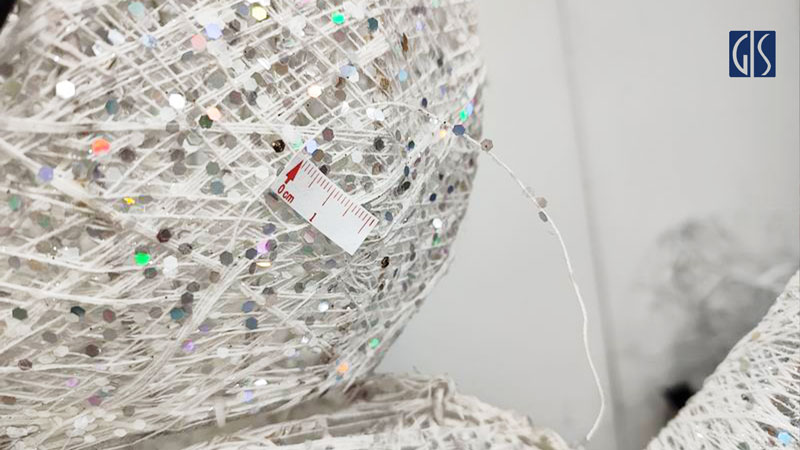
Gifts are not difficult to inspect simply because they are gifts. The real challenge comes from the way gift orders are purchased, produced, packaged, and delivered.
A promotional mug may be a relatively simple product. But when that mug has a customized logo, must be packed in a presentation box with other items, needs to arrive before a specific holiday, and must look perfect when the recipient opens it, quality control becomes much more demanding.
For importers and brands sourcing gifts from China and other Asian manufacturing markets, a professional gift inspection helps verify not only the product itself, but also the complete gift set, presentation, packaging, and delivery readiness.
GIS Inspection provides third-party inspection services for corporate gifts, promotional products, seasonal gifts, gift sets, Christmas products, home décor, toys, electronics, textiles, ceramics, and other consumer products.
Why Are Gift Orders Different?
Three factors make gift orders particularly sensitive to quality problems.
1. Appearance Is Part of the Product
For many gifts, the recipient's first impression is determined by appearance.
A small scratch, printing defect, stain, color variation, damaged gift box, or poorly positioned logo may be unacceptable even when the product itself still functions correctly.
For this reason, cosmetic requirements should be clearly defined before production begins.
The approved sample should show not only the product itself, but also the expected finishing, decoration, and presentation.
2. The Delivery Date Is Often Fixed
Seasonal and promotional gifts are usually connected to a specific event. Christmas gifts must arrive before Christmas. Valentine's Day products need to reach the market before February 14. Corporate gifts may be required for a conference, product launch, trade show, or company event. A shipment that arrives after the event may have little or no commercial value.
This means quality problems need to be identified while there is still enough time for the factory to rework or replace defective products.
3. Gift Sets Can Hide Missing Components
A gift set may contain several individual products, accessories, cards, inserts, ribbons, or other components.
Once the set is sealed, missing components may not be discovered until the final customer opens the package.
For example, a gift box may contain:
- One ceramic mug
- One notebook
- One pen
- One keychain
- One greeting card
- One ribbon
The individual products may all pass their own inspections, but the complete gift set still fails if the greeting card or keychain is missing.
Therefore, gift set inspection should include opening randomly selected sealed boxes and checking the complete contents against the approved sample or Bill of Materials (BOM).
The Most Important Question: What Exactly Has Been Approved?
Before production starts, buyers should establish a clear reference for the factory and inspector.
A useful gift inspection specification should include:
- A physical approved sample of the finished product.
- A photograph of the complete gift set.
- A list of every component included in the set.
- Approved artwork and logo files for customized products.
- Product specifications and acceptable tolerances.
- Packaging specifications.
- Defect classification and AQL requirements.
- Destination market and applicable compliance requirements.
- Required delivery date.
- The latest date when rework can still be completed.
For gift sets, a photograph showing every component and its position inside the box can be particularly useful. It gives the factory and inspector a clear visual reference for both completeness and presentation.
Quality Standards for Gift Products
A gift inspection does not require a completely different sampling methodology from other product inspections. For many products, sampling can be based on ISO 2859-1 or ANSI/ASQ Z1.4, according to the buyer's requirements. What is different is the quality focus. For gift products, cosmetic appearance and presentation may have a stronger commercial impact than they would for an ordinary industrial product.
Buyers may therefore establish separate acceptance criteria for:
- Critical defects
- Major defects
- Minor defects
- Cosmetic defects
- Functional defects
- Packaging defects
The applicable sampling standard, inspection level, and AQL limits should be agreed before production begins rather than being decided when the inspector arrives at the factory.
What Does GIS Check During a Gift Inspection?
The inspection scope depends on the product and buyer's requirements, but a typical GIS gift inspection can include the following.
Quantity Verification
The inspector verifies whether the production quantity and packed quantity correspond to the purchase order.
Checks may include:
- Total quantity
- Carton quantity
- Assortment
- Model or SKU
- Color
- Packed quantity
- Unfinished quantity
Quantity discrepancies can be particularly problematic for seasonal orders because there may be insufficient time to manufacture replacement products.
Product Appearance and Workmanship
The inspector compares randomly selected products with the approved sample and specifications.
Typical checks include:
- Scratches
- Stains
- Dents
- Cracks
- Deformation
- Color variation
- Surface defects
- Poor finishing
- Loose components
- Misalignment
- Poor stitching
- Poor bonding
- Printing defects
- Logo defects
For premium or highly customized gifts, the buyer may define stricter acceptance criteria for appearance.
Materials and Components
The inspector verifies whether the materials and components correspond to the approved specifications.
Depending on the product, this may include:
- Fabric
- Plastic
- Metal
- Wood
- Ceramic
- Glass
- Electrical components
- Accessories
- Decorative components
Unauthorized material substitutions should be identified before shipment.
Gift Set Completeness
For multi-component gift sets, inspectors randomly open finished and sealed boxes.
Each selected set can be checked against the approved reference to verify:
- Every required component is present.
- The correct product is included.
- The correct color or model is included.
- The correct quantity is included.
- Accessories are present.
- Cards and inserts are present.
- Components are arranged correctly.
- The final presentation matches the approved sample.
This is one of the most important checks for gift sets because a carton-level inspection cannot reveal what is inside a sealed presentation box.
Dimensions and Weight
Measurements are taken according to the buyer's specifications.
Depending on the product, GIS may check:
- Length
- Width
- Height
- Diameter
- Thickness
- Product weight
- Gift box dimensions
- Carton dimensions
- Gross weight
- Net weight
Measured results are compared with the approved specifications and agreed tolerances.
Function and Performance
Functional checks depend on the type of gift.
For electronic gifts, this may include:
- Power-on test
- Switch and button operation
- Charging
- Indicator function
- Basic operating functions
For household or kitchen gifts:
- Assembly
- Opening and closing
- Stability
- Basic usability
For textile or fashion accessories:
- Zipper operation
- Button attachment
- Stitching
- Fastener function
The inspector follows the client's specifications and agreed inspection checklist.
Logo, Printing and Decoration
Customized gifts require additional attention to branding.
GIS can check:
- Logo design
- Logo position
- Printing
- Color
- Font
- Pattern
- Embroidery
- Laser engraving
- Surface decoration
- Artwork consistency
The finished product should be compared with the approved artwork or golden sample.
Labels and Markings
Labels and markings should be checked against the buyer's requirements and destination-market regulations.
Depending on the product, this can include:
- Brand name
- Product name
- Model number
- Manufacturer information
- Country of origin
- Barcode
- Batch number
- Warning information
- Care labels
- Material information
- Recycling marks
- Instructions
Packaging and Presentation
Packaging is often part of the gift experience.
GIS can inspect:
- Gift boxes
- Inner trays
- Inserts
- Tissue paper
- Ribbons
- Polybags
- Protective materials
- Shipping cartons
- Carton markings
- Barcodes
- Sealing
The inspector also checks whether packaging provides adequate protection during transportation.
When Should Gift Products Be Inspected?
The best inspection strategy depends on the production schedule and the importance of the delivery deadline.
|
Inspection |
Point in production |
|
Before production starts, at development or pilot run stage |
|
|
Between 30 and 50 per cent of production |
|
|
100% of production |
|
|
At loading |
|
|
Defect sorting |
A full visual check of every unit, after the fact |
Factory audits are separate from inspection and cover supplier qualification, extended factory assessment and social accountability.
Seasonal Gift Orders Require Backward Planning
The delivery date should not be the only date considered when planning a gift order. Buyers should work backwards from the date when the products are actually needed.
The schedule should include:
Production → Inspection → Rework → Re-inspection → Packing → Loading → International Transit → Customs Clearance → Final Delivery
A quality problem discovered immediately before shipment may leave no time for corrective action. This is why During Production Inspection can be particularly valuable for Christmas, Valentine's Day, Mother's Day, promotional campaigns, and corporate events. Buyers should also consider factory shutdowns and production peaks, especially around major holidays such as Chinese New Year.
Compliance Requirements for Gift Products
Gift products can be subject to different compliance requirements depending on their intended users, product type, materials, functions, and destination market. Before production, buyers should identify which regulatory requirements apply to their specific gift products.
|
Question |
When It Applies |
Where to Read More |
|
Is it a children's product? |
Designed or intended primarily for children 12 years of age or younger in the United States. |
|
|
Is it a toy? |
The product is designed, manufactured, or marketed as a plaything for children, regardless of whether it is sold specifically as a toy. |
CPSC – Toy Safety Business Guidance EN 71 in EU |
|
Will it be sold or distributed in California? |
Products sold, distributed, or provided as gifts in California may be subject to Proposition 65 requirements when they expose consumers to listed chemicals. |
|
|
Is it an electrical or electronic gift? |
Includes powered gifts such as LED products, electronic gadgets, chargers, heated products, and other electrical devices. |
|
|
Does it come into contact with food or beverages? |
Includes mugs, bottles, lunch boxes, kitchenware, utensils, containers, and other food-contact gifts. |
|
|
Does it contain chemicals or restricted substances? |
Applies to products containing plastics, coatings, inks, adhesives, textiles, metals, or other materials that may contain regulated substances. |
|
|
Is it a textile or apparel gift? |
Includes clothing, scarves, blankets, bags, plush textile products, and other textile-based gifts. |
|
|
Is it furniture or a household product? |
Applies to gifts such as chairs, stools, tables, storage furniture, shelves, and other products with specific structural or stability risks. |
|
|
Does the product or packaging require specific environmental compliance? |
Applies when products or packaging are placed on markets with requirements concerning restricted substances, recyclability, packaging waste, or producer responsibility. |
|
|
Does it require specific labels or warnings? |
Applies when products require age warnings, safety warnings, instructions, manufacturer information, country-of-origin information, or other mandatory markings. |
Important: Compliance requirements depend on the product, intended use, materials, claims, and destination market. A factory or product inspection can verify applicable markings, labels, packaging, documentation, and selected product characteristics, but laboratory testing, certification, or other conformity assessment may be required for certain chemical, electrical, mechanical, food-contact, or safety requirements.
What Should Buyers Provide Before the Inspection?
To obtain useful and objective inspection results, buyers should provide the inspector with sufficient reference information.
- Approved Sample: Provide a physical sample whenever possible.
- Product Specification: Include materials, dimensions, weight, colors, functions, tolerances, and other technical requirements.
- Gift Set BOM: List every component included in the complete set.
- Artwork: Provide approved artwork for logos, printing, labels, packaging, and other customized elements.
- Packaging Specification: Specify the required gift box, inner packaging, carton, shipping marks, barcode, and labels.
- AQL Requirements: Confirm the applicable sampling standard, inspection level, and acceptance criteria.
- Destination Market: The destination country or region should be identified before inspection so that relevant regulatory requirements can be considered.
- Delivery Schedule: Provide both the required delivery date and the latest date when corrective action can still be completed.
How Does GIS InspectionSample Gift Products?
For AQL-based inspections, GIS selects samples according to the agreed inspection plan.
Samples should represent the actual production rather than being selected only from the best-looking cartons.
Depending on the inspection scope, GIS may check:
- Different cartons
- Different production batches
- Different models
- Different colors
- Different sizes
- Different production areas
The inspector then records defects according to the agreed classification and acceptance criteria. Critical, major, and minor defects are counted separately. f the number of defects exceeds the agreed acceptance limit, the shipment may be reported as Fail, subject to the buyer's defined inspection criteria.
What Does a GIS Gift Inspection Report Include?
A professional report should allow the buyer to understand the actual condition of the goods without being physically present at the factory.
A GIS inspection report can include:
- Factory information
- Inspection date
- Product information
- Purchase order details
- Inspection quantity
- Sample size
- AQL requirements
- Defect classification
- Product appearance
- Workmanship
- Measurements
- Functional test results
- Gift set completeness
- Label and marking results
- Packaging results
- On-site test results
- Defect photographs
- Overall conclusion
Photographic evidence is particularly important for gift inspections because cosmetic defects, packaging problems, missing components, and printing issues can be clearly documented.
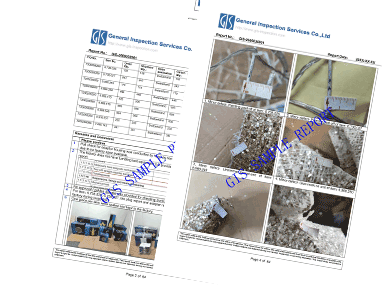
View a Sample GIS Inspection Report
Want to see what a professional gift inspection report looks like? View a sample GIS inspection report to see how inspection findings, defect classifications, measurements, test results, and photographic evidence are documented.
Common Gift Inspection Defects
Some of the most common problems found during gift inspections include:
Product Defects
- Scratches
- Stains
- Cracks
- Dents
- Deformation
- Color variation
- Poor finishing
Workmanship Defects
- Loose parts
- Poor assembly
- Uneven stitching
- Poor bonding
- Misalignment
- Missing components
Gift Set Defects
- Missing item
- Wrong item
- Wrong color
- Wrong quantity
- Incorrect arrangement
Branding Defects
- Wrong logo
- Incorrect logo position
- Color mismatch
- Poor printing
- Blurred graphics
- Incorrect artwork
Packaging Defects
- Damaged gift box
- Incorrect insert
- Missing ribbon
- Wrong barcode
- Incorrect carton marking
- Insufficient protection
Gift Inspection vs. Standard Product Inspection
The basic inspection methodology can be similar, but the risk priorities are different.
A standard product inspection primarily asks:
Does the product meet its specifications and function correctly?
A gift inspection also asks:
Will the product and its presentation meet the recipient's expectations when the gift is opened?
Therefore, gift inspections often require greater attention to:
- Cosmetic appearance
- Presentation
- Gift set completeness
- Customized decoration
- Retail packaging
- Accessories
- Seasonal delivery requirements
A missing accessory that does not affect product function can still make a gift set unacceptable.
Where Are Gifts Manufactured?
Gift production is distributed across several major manufacturing regions in Asia.
In China, different manufacturing clusters specialize in different product categories, including:
- Yiwu — promotional products, small commodities, seasonal goods and accessories
- Guangdong — electronics, household products, packaging and consumer goods
- Fujian — textiles, footwear, bags and consumer products
- Zhejiang — household goods, small commodities, textiles and promotional products
- Jiangsu — textiles, home products and industrially manufactured consumer goods
The location of the factory is only one part of supplier assessment.
Buyers should also determine whether the company is:
- The actual manufacturer
- A factory using subcontractors
- A trading company
- A factory with outsourced decoration or assembly
This matters because the inspection scope should follow the actual production chain.
Learn more about China Manufacturing Hubs: https://www.gis-inspection.com/post/china-manufacturing-hubs-guide
Why Choose General Inspection Services(GIS) for Gift Inspection?
GIS Inspection provides independent third-party quality control services for international buyers sourcing from China and other Asian manufacturing markets.
Our quality control services include:
- Factory Inspection
- Supplier Audit
- Pre-Production Inspection
- During Production Inspection
- Pre-Shipment Inspection
- Container Loading Supervision
- 100% Inspection
- Product Testing
- Quality Consulting
With more than 20 years of experience in third-party inspection and quality control, GIS helps buyers identify quality risks before products leave the factory. Our inspectors can work according to your approved samples, product specifications, AQL requirements, packaging standards, and destination-market requirements.
Frequently Asked Questions
Q1. What is a gift inspection?
A gift inspection is a third-party quality control inspection conducted at the factory to verify that gift products meet the buyer's approved samples, specifications, quality requirements, packaging requirements, and applicable standards.
Q2. What makes gift inspection different from ordinary product inspection?
The inspection methodology can be similar, but gift inspection places greater emphasis on cosmetic appearance, presentation, packaging, branding, and the completeness of multi-component gift sets.
Q3. Why should gift sets be opened during inspection?
A sealed gift box can hide missing or incorrect components. Opening randomly selected finished sets allows inspectors to verify every component against the approved sample or BOM.
Q4. When should I inspect gift products?
For seasonal orders, it is recommended to plan quality control early enough to allow corrective action. Depending on the order, buyers can use Pre-Production Inspection, During Production Inspection, Pre-Shipment Inspection, and Container Loading Supervision.
Q5. What AQL standard can be used for gift inspection?
AQL sampling can be based on standards such as ISO 2859-1 or ANSI/ASQ Z1.4, according to the buyer's requirements. The sampling plan and acceptance levels should be confirmed before inspection.
Q6. What should I provide for a gift inspection?
At minimum, provide the approved sample or detailed specifications, gift set BOM, packaging requirements, artwork, AQL requirements, destination market, and delivery schedule.
Q7. Can GIS inspect customized promotional gifts?
Yes. GIS can inspect customized promotional and corporate gifts, including product quality, logo, printing, decoration, packaging, labeling, and gift set completeness.
Q8. Can GIS inspect Christmas and seasonal gifts?
Yes. GIS provides quality inspection services for Christmas gifts, seasonal decorations, promotional gifts, gift boxes, toys, home décor, textiles, electronics, and other seasonal products.
Q9. What happens if the inspection fails?
The inspection report identifies the defects and provides objective evidence, including photographs. The buyer can then request rework, replacement, sorting, or other corrective action from the supplier before shipment.
Q10. How quickly can GIS provide the inspection report?
GIS generally provides inspection reports within 24 working hours after the inspection is completed, subject to the agreed reporting requirements.
Q11. Need to Inspect Your Gift Order?
Tell GIS what you are buying, where it is manufactured, the quantity, destination market, and required delivery date. We can help you determine the appropriate inspection stage and quality control scope for your gift order. GIS Inspection — Helping Global Buyers Control Product Quality Before Shipment.
GIS Inspection
GIS Inspection (General Inspection Services), established in 2005 and headquartered in China, is an CNAS 17020, ISO 9001, and AQSIQ accredited third-party agency. We specialize in comprehensive quality control inspection and supply chain solutions for global buyers. By deploying a dedicated team of 100% full-time professional inspectors, GIS Inspection ensures peak integrity and technical consistency. Today, we are the trusted quality partner for over 12,000 global brands.
Email: lisaliu@gis-inspection.com