
China Compulsory Certification (CCC) is a mandatory product conformity assessment system established by the Chinese government to protect consumer safety, public health, and national security.
Many products—including household appliances, electronic products, automotive parts, power tools, and low-voltage electrical equipment—must obtain CCC certification before they can be legally imported, sold, or used in the Chinese market.
In this complete guide, you'll learn what CCC Certification is, which products require it, how the certification process works, typical certification costs, exemption rules, and practical compliance tips for importers and manufacturers.
Whether you're an overseas buyer, exporter, manufacturer, or quality manager, this guide will help you navigate China's mandatory certification requirements and avoid costly compliance risks.
Content
Why Is CCC Certification Important?
Which Products Require CCC Certification?
CCC Certification Process and Cost
CCC Compliance Tips for Manufacturers and Buyers
Import Verification Requirements for CCC-Certified Products
Special Customs Facilitation Measures for Imported Automotive Parts Subject to CCC Regulation
What Is CCC Certification?
China Compulsory Certification, commonly known as CCC Certification or 3C Certification, is China's mandatory product certification system.
Established in accordance with World Trade Organization (WTO) principles and internationally accepted conformity assessment practices, the CCC system is designed to:
- Protect consumer health and safety;
- Safeguard animal and plant life;
- Protect the environment;
- Safeguard national security; and
- Ensure that high-risk products consistently comply with mandatory Chinese safety requirements through ongoing third-party conformity assessment.
Unlike voluntary certifications, CCC certification is legally required for products included in the official CCC Product Catalogue.
When the system was first introduced, China designated 19 major product categories covering 132 specific product types as subject to mandatory certification.
Why Is CCC Certification Important?
The CCC system plays a central role in ensuring consumer safety and market integrity in China. Beyond regulatory compliance, holding a CCC certificate sends a clear message to buyers, distributors, and regulators that a product has undergone rigorous testing and inspection.
1. Legal Compliance
China’s regulations mandate CCC certification for listed products. Non-compliance can result in shipment seizure at ports, financial penalties, and in some cases, prohibition from sale. A notable example is China’s ban on power banks without CCC certification, which led to significant product recalls.
2. Consumer Safety and Quality Assurance
CCC-certified products undergo testing in accredited laboratories to verify safety performance, durability, and adherence to environmental standards. This reduces the risk of product failures or hazards after reaching the consumer.
3. Market Access
Retailers, distributors, and e-commerce platforms in China often require proof of CCC certification before accepting a product. Without it, entry into the Chinese market becomes extremely limited.
4. Protection Against Regulatory Action
With follow-up inspections built into the certification framework, manufacturers who maintain compliance reduce the risk of recalls or regulatory investigations.
Which Products Require CCC Certification?
The CCC Certification Catalogue is an official list of products identified by the Chinese government as posing relatively high safety risks.
According to Chinese regulations:
- Any product included in the CCC Catalogue must obtain a valid CCC Certificate before it can be manufactured, imported, sold, or used commercially in China.
- Certified products must bear the official CCC Mark.
- Products covered by the catalogue that are sold without certification may be subject to confiscation, substantial fines, market withdrawal, or even legal liability if safety incidents occur.
The Top 10 Product Categories Covered by the 2026 CCC Certification Catalogue
The current CCC Certification Catalogue contains 16 major product categories and hundreds of specific products. Below are the ten categories most frequently encountered by manufacturers, importers, quality inspectors, and consumers.
1. Wires and Cables
This category includes electrical wires and cables commonly used in residential buildings, commercial facilities, and industrial equipment, such as:
- Insulated electrical wires
- PVC insulated cables
- Rubber insulated cables
- Wiring assemblies
In 2024, flame-retardant wires and cables were officially added to the mandatory CCC catalogue. Poor insulation or inadequate flame-retardant performance can significantly increase the risk of electrical fires, making these products a key focus during incoming material inspections and quality control.
2. Circuit Switches, Sockets, and Electrical Connection Devices
Products include:
- Wall switches
- Power sockets
- Extension sockets
- Plugs
- Appliance couplers
- Fuse links
- Electrical connectors
These products are used daily in homes and workplaces. Because electrical leakage, overheating, and poor contact can create significant safety hazards, they remain one of the core categories requiring mandatory CCC certification.
Some fuse products currently follow the Supplier's Declaration of Conformity (SDoC) scheme but are expected to transition to third-party CCC certification in future regulatory updates.
3. Low-Voltage Electrical Equipment
Typical products include:
- Circuit breakers
- Residual Current Devices (RCDs)
- Contactors
- Relays
- Industrial control components
These devices provide essential electrical protection in industrial automation systems, commercial buildings, and power distribution networks.
Manufacturers and buyers should always verify valid CCC certificates when purchasing low-voltage electrical components used in automation equipment, industrial machinery, or communication systems.
4. Small Power Motors and Electric Tools
Covered products include:
- Fan motors
- Compressor motors
- Electric drills
- Angle grinders
- Rotary hammers
- Portable electric tools
Certain products may currently qualify for the Supplier's Declaration of Conformity (SDoC), but products falling within the CCC catalogue may not be manufactured, imported, or sold without proper certification.
5. Welding Machines and Household Appliances
This category covers a wide range of electrical appliances, including:
- Refrigerators
- Air conditioners
- Washing machines
- Electric water heaters
- Electric fans
- Air purifiers
- Welding machines
In recent years, power banks (portable chargers) and portable energy storage systems (ESS) have also been incorporated into the CCC Certification Catalogue.
Products in this category must obtain CCC certification before they can be legally sold in the Chinese market.
6. Audio, Video, and Information Technology Equipment
Products include:
- Computer monitors
- Desktop computers
- Power adapters
- Speakers
- Projectors
- Audio equipment
- Information technology devices
These products are widely used in offices, schools, and homes. Incoming inspections should verify that the product model exactly matches the corresponding CCC certificate.
7. Motor Vehicles and Safety Components
Products include:
- Passenger vehicles
- Motorcycles
- Automotive safety belts
- Vehicle lighting
- Rearview mirrors
- Dash cameras
- Helmets for electric bicycle riders (added in 2024)
These products directly affect transportation safety. Components covered by the CCC catalogue must be certified before installation or sale.
8. Children's Products (Bicycles and Toys)
Products include:
- Children's bicycles
- Baby strollers
- Tricycles
- Plastic toys
- Electric toys
Because these products are intended for infants and young children, they are subject to stringent safety requirements.
Children's products covered by the CCC catalogue cannot be legally sold through retail stores or e-commerce platforms without valid CCC certification.
9. Gas Appliances and Explosion-Proof Electrical Equipment
Products include:
- Household gas cookers
- Gas water heaters
- Commercial gas-burning appliances
- Combustible gas detectors
- Explosion-proof lighting fixtures
Beginning in 2024, several new categories of gas appliances and explosion-proof electrical equipment became subject to mandatory CCC certification to reduce the risks associated with gas leaks, fires, and explosions.
10. Fire Protection and Public Safety Products
This category includes:
- Emergency lighting
- Safety glass
- Safety nets
- Other public safety equipment
These products are widely used in public buildings and engineering projects, where valid CCC certification is required before procurement and installation.
Note
Many outsourced mechanical components, structural parts, and sheet metal components are not included in the CCC Certification Catalogue and therefore do not require CCC certification.
However, if these assemblies contain electrical components, cables, connectors, switches, or other parts that fall within the CCC catalogue, those individual components must still obtain separate CCC certification.
This is one of the most commonly overlooked issues during supplier qualification, incoming quality inspections, and factory audits.
Newly Added Product Categories in the CCC Catalogue (2024–2026)
Between 2024 and 2026, China's certification authorities expanded the CCC Certification Catalogue to cover several emerging product categories with higher safety risks. Companies involved in manufacturing, importing, or sourcing these products should pay close attention to the latest regulatory updates.
The following products have been officially included in the mandatory CCC Certification Catalogue and are now subject to compulsory certification:
- Helmets for electric bicycle riders
- Commercial gas appliances
- Flame-retardant electrical wires and cables
- Electronic bidet toilet seats
- Combustible gas detectors and alarm systems
- Water-based interior wall coatings
- Explosion-proof lighting fixtures
In addition, several rapidly growing product categories have also been incorporated into the catalogue, including:
- Portable energy storage systems (ESS)
- New energy charging cable assemblies
Following the implementation of these regulations, products covered by the updated catalogue may no longer be manufactured, imported, or sold in China without valid CCC certification. Non-certified products are subject to regulatory enforcement and market removal.
CCC Certification Process and Cost
01 Two Core Organizations Involved in CCC Certification
The CCC certification system involves two key types of authorized organizations, each with distinct responsibilities:
Designated CCC Certification Bodies
Certification bodies are responsible for:
- Accepting CCC certification applications
- Reviewing technical documentation
- Conducting factory inspections
- Issuing CCC certificates
- Performing annual surveillance and certificate maintenance
These organizations are the official authorities authorized to issue CCC certificates.
Designated CCC Testing Laboratories
Designated laboratories are responsible for:
- Conducting product type testing
- Performing testing according to applicable Chinese standards
- Issuing officially recognized test reports
Every CCC certificate is supported by test data generated by a CNCA-designated laboratory.
Important note: Not every laboratory is authorized to perform CCC testing, and not every certification body can certify every product category. Both the certification body and testing laboratory must be officially designated for the specific product category.
02 Find Official Certification Bodies and Testing Laboratories
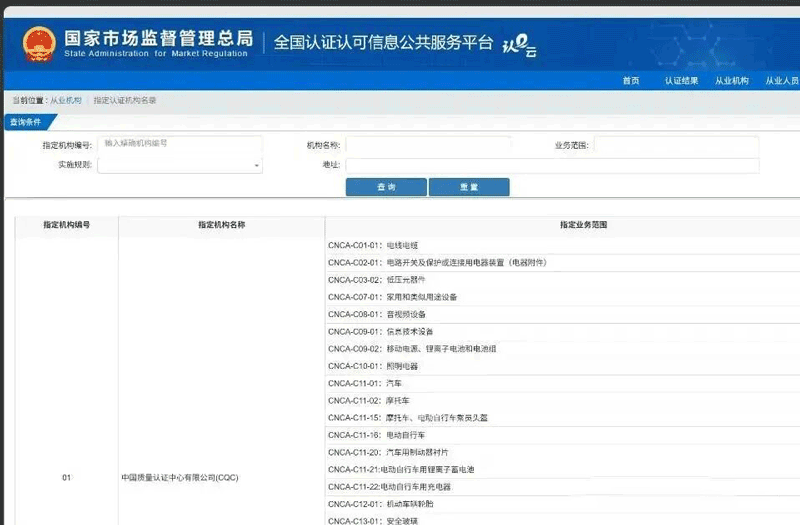
The National Certification and Accreditation Information Public Service Platform (Renke Cloud) is the only official source for verifying authorized CCC certification bodies and testing laboratories.
Any organization not listed on the platform is not officially authorized to issue CCC certificates or conduct CCC testing.
Official website:
Step 1: Search for Designated CCC Certification Bodies
- Visit the official Renke Cloud website.
- Click the "Certification Bodies" section on the homepage.
- Open the directory of Designated Certification Bodies for China Compulsory Certification (CCC).
- Filter organizations according to:
Product category
Applicable Chinese standards
Certification unit
Best Practice
Choose a certification body that:
- Specializes in your product category
- Has comprehensive authorization for your products
- Has relevant industry experience
Note: Avoid selecting a certification body solely based on brand recognition or applying through organizations that are not authorized for your product category, as this may lead to:
- More stringent reviews
- Additional corrective actions
- Longer certification timelines
Step 2: Search for Designated CCC Testing Laboratories
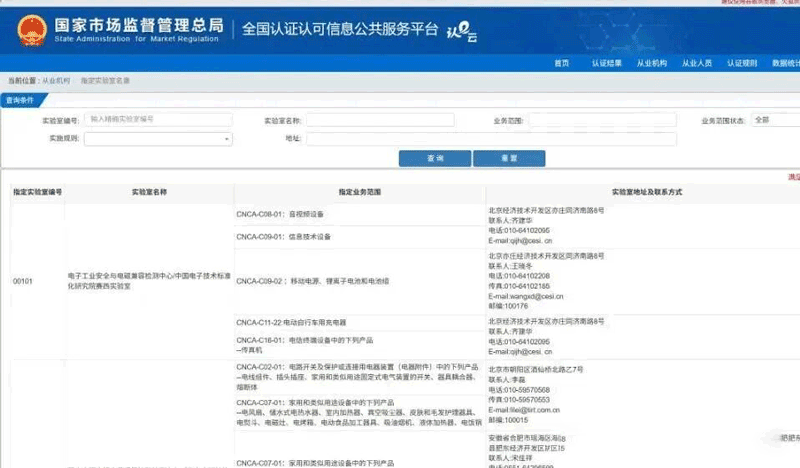
From the same Certification Bodies section, open the directory of Designated CCC Testing Laboratories.
Identify laboratories authorized for your product's applicable testing standards and test items.
Verify:
- Laboratory authorization scope
- Authorization validity period
- Applicable testing capabilities
This ensures that the laboratory's type test report will be fully accepted by the selected certification body.
Compliance Tip: Test reports issued by laboratories that are not officially designated for CCC testing—or by laboratories operating outside their authorized product scope—cannot be used to obtain CCC certification. Choosing the wrong laboratory may require complete re-testing, resulting in significant additional costs and project delays.
03 Certification Cost
Certification fees vary depending on several factors, including:
- Product category
- Certification unit
- Number of product models
- Factory size
- Manufacturing complexity
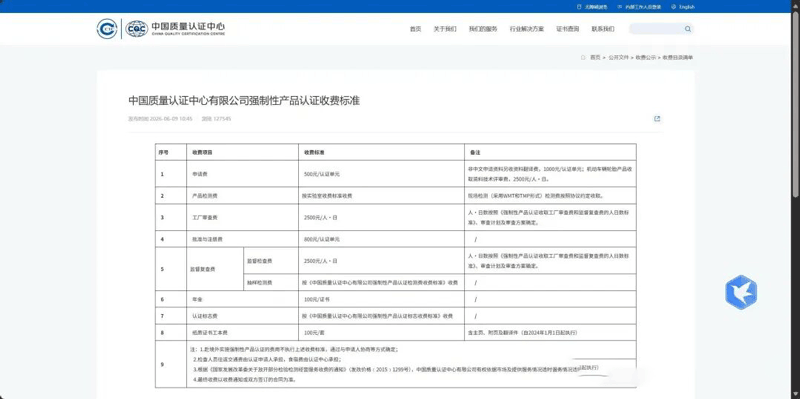
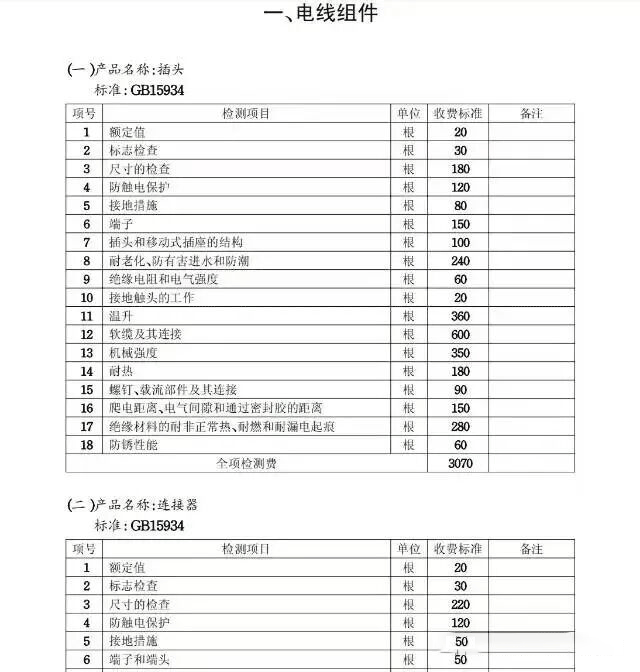
Most designated certification bodies publish their fee schedules on their official websites.
For example, the China Quality Certification Centre (CQC) publishes reference certification fees for different product categories, which companies can use as a budgeting reference.
04 Product Testing Fees
After identifying the appropriate designated testing laboratory, companies should contact the laboratory directly to obtain a quotation for product testing.
Testing fees depend on factors such as:
- Product type
- Applicable Chinese standards
- Required test items
- Number of product models
- Testing complexity
China's National Development and Reform Commission (NDRC) has also published guideline pricing for certain testing services, which can serve as a useful reference.
Recommended Budgeting Approach
The most accurate way to estimate CCC certification costs is to combine:
- Government guideline pricing
- Public fee schedules published by certification bodies
- Official quotations from designated testing laboratories
This approach helps businesses establish a realistic certification budget before beginning the application process.
05 Final Step: Start Your CCC Certification Application
After selecting the appropriate certification body, estimating certification costs, and verifying the qualifications of all participating organizations, you are ready to begin the formal certification process.
The standard process includes:
- Submit your application to an authorized CCC certification body, together with the required technical documentation, including company information, product specifications, circuit diagrams, engineering drawings, and manufacturing process descriptions.
- Coordinate with a designated CCC testing laboratory to submit product samples for type testing.
- After successful testing, arrange the required factory inspection.
- Once the documentation review, product testing, and factory audit have all been successfully completed, the certification body will issue the official CCC Certificate, completing the certification process.
Note: The most efficient and cost-effective way to obtain CCC certification is to use the official CNCA platforms to identify qualified certification bodies and testing laboratories, accurately estimate certification costs, and ensure full regulatory compliance from the beginning. A transparent process, proper planning, and qualified partners can help businesses obtain certification successfully on the first attempt, avoid costly rework, and minimize unnecessary certification expenses.
CCC Compliance Tips for Manufacturers and Buyers
Whether you are a manufacturer, importer, sourcing company, or quality manager, the following best practices can help reduce compliance risks.
1. Verify Whether Your Product Is Covered by the CCC Catalogue
If you are unsure whether your product or purchased components require CCC certification, consult the latest official CCC Product Catalogue Description and Definition Table published by the Certification and Accreditation Administration of China (CNCA).
2. Maintain Complete Certification Records
During incoming quality inspections, supplier evaluations, and quality management system audits, companies should maintain complete documentation, including:
- The applicable CCC Product Catalogue
- Valid CCC certificates
- Supplier qualification records
- Product test reports
- Inspection records
Keeping these documents organized helps demonstrate compliance with quality management systems such as ISO 9001 and supports successful customer and regulatory audits.
3. Stay Updated on Regulatory Changes
The CCC Certification Catalogue is updated periodically to reflect technological advances and emerging product safety risks.
Manufacturers and importers should regularly monitor announcements issued by:
- The State Administration for Market Regulation (SAMR)
- The Certification and Accreditation Administration of China (CNCA)
Keeping up with regulatory changes helps businesses avoid using outdated certification requirements and reduces the risk of non-compliance.
Import Verification Requirements for CCC-Certified Products
Imported products subject to China's China Compulsory Certification (CCC) requirements fall into three distinct compliance categories based on their regulatory status:
- Products that Require CCC Certification
- Products that Do Not Require CCC Certification
- Products Exempt from CCC Certification
These three categories are clearly defined, mutually exclusive, and serve as the primary basis for customs declaration and import supervision by Chinese Customs.
1. Products That Require CCC Certification
(Standard Products Listed in the CCC Catalogue)
Products included in the official CCC Product Catalogue that do not qualify for any exemption or waiver must obtain CCC Certification before they can be imported into China.
These products are required to:
- Obtain a valid CCC Certificate issued by a designated certification body;
- Bear the official CCC mark in accordance with applicable regulations;
- Comply with all mandatory certification requirements before they can be:
- Imported into China;
- Sold in the Chinese market; or
- Used in commercial or business operations.
Chinese Customs will conduct full import verification for these products during customs clearance.
2. Products That Do Not Require CCC Certification
(Statutory Exemptions — No Application Required)
Certain imported products are legally exempt from CCC Certification.
For these products:
- No CCC Certificate is required;
- No exemption application needs to be submitted to market regulatory authorities;
- Chinese Customs will not conduct CCC import verification.
These situations fall into two categories.
(1) Five Basic Statutory Exemptions
The following products are directly exempt from CCC certification requirements:
① Personal belongings of foreign diplomatic missions
Articles imported for the personal use of:
- Foreign embassies in China;
- Foreign consulates in China;
- Offices of international organizations in China;
- Diplomatic personnel.
② Personal belongings of Hong Kong and Macao government offices
Items imported for the official or personal use of:
- Government offices of the Hong Kong Special Administrative Region located in Mainland China;
- Government offices of the Macao Special Administrative Region located in Mainland China;
- Their staff members.
③ Personal belongings carried by travelers
Articles personally carried into China by inbound travelers for their own personal use.
④ Foreign government aid or donated goods
Products donated or provided as official assistance by foreign governments.
⑤ Other situations exempted by law
Any other circumstances where mandatory CCC Certification is not required under applicable Chinese laws and regulations.
(2) Special Supplementary Exemptions
① Complete Equipment Imports
For imported complete machinery or equipment (Customs cargo attribute "22 – Complete Equipment"):
- Components and parts imported together with the complete equipment for installation or matching use are exempt from CCC import verification.
- However, if the quantity of components obviously exceeds the reasonable quantity required for the complete equipment, those excess components must comply with normal CCC certification requirements.
② Imported Used Mechanical and Electrical Products
For imported used electromechanical products (Customs cargo attribute "21 – Used Products", excluding "22 – Complete Equipment"), exemption applies if:
- The import has received special approval from the Chinese government;
- The import has been approved by provincial-level government authorities or above;
- The products are re-imported after overseas repair;
- The products are temporarily exported and subsequently re-imported;
- The products are returned after export;
- The products are transferred domestically and then re-imported.
③ Bonded Zone Supervision
The following products entering bonded zones from overseas are exempt from CCC import verification:
- Warehousing and logistics goods;
- Office supplies for enterprise self-use;
- Raw materials and components used for export processing.
However, if products are imported into the domestic market from bonded zones, or production equipment used by bonded-zone enterprises falls within the CCC Product Catalogue, CCC import verification is still required.
3. Products Exempt from CCC Certification
Some products are included in the CCC Product Catalogue but qualify for a special-use exemption.
In these cases, companies must apply to the competent market regulatory authority and obtain an official:
Certificate of Exemption from China Compulsory Certification (CCC Exemption Certificate) before importing the products. After importation, these products must only be used for their declared purpose and may not be used for any other commercial purpose without authorization.
There are nine statutory exemption categories.
① Products used for scientific research or testing
Products imported solely for research, development, laboratory testing, or evaluation.
② Components required for evaluating imported production lines
Components imported for assessing newly introduced manufacturing technologies or production lines.
③ Products imported solely for repair services
Products required exclusively for repairing equipment owned by end users.
④ Equipment or components for manufacturing or production lines
Equipment and components required for factory production lines or complete manufacturing systems (excluding office equipment).
⑤ Products used only for commercial exhibition
Products imported exclusively for exhibition or demonstration purposes and not intended for sale.
⑥ Temporarily imported products
Products imported temporarily and subsequently re-exported, including exhibition samples.
⑦ Components imported for manufacturing products entirely for export
Components imported under general trade solely for manufacturing finished products that will be exported in their entirety.
⑧ Components imported under processing trade
Components imported under processing trade or processing with supplied materials for manufacturing products exclusively for export.
⑨ Other approved special-use situations
Any other circumstances where exemption from CCC Certification is granted due to a legally recognized special purpose.
Special Customs Facilitation Measures for Imported Automotive Parts Subject to CCC Regulation
To improve customs clearance efficiency for imported automotive parts, the General Administration of Customs of China (GACC) has introduced a series of facilitation measures covering the entire import process—from CCC exemption declarations to inspection and certification verification.
The key measures include the following:
1. Declaration Before Verification
For 11 designated HS codes of imported automotive parts that qualify for CCC exemption, importers may complete customs declaration using a Self-Declaration for Exemption from China Compulsory Certification (CCC) issued by the consignee.
Under this simplified procedure:
- Importers can complete customs declaration without first obtaining a paper-based CCC Exemption Certificate.
- Goods may be released and removed from the port after declaration.
- Any required supplementary information can be added later through the customs declaration amendment process.
This measure significantly reduces customs processing time and accelerates cargo release.
2. Acceptance of CCC Certification Certificates
Initial Implementation
For automotive parts covered under eight designated HS codes that require CCC certification, Chinese Customs accepts valid CCC Certificates issued by officially recognized certification bodies.
As a general rule:
- Customs will rely on the existing certification documentation.
- Routine sampling and laboratory testing during customs inspection are generally waived.
Expanded Pilot Program
The certificate acceptance policy has been expanded in the following eight regions:
- Beijing
- Tianjin
- Shanghai
- Chongqing
- Guangzhou
- Shenzhen
- Hangzhou
- Ningbo
Within these pilot regions, the facilitation measure applies to all imported automotive parts subject to CCC certification, allowing Customs to rely on valid CCC certificates rather than conducting routine sampling inspections.
This expansion further shortens customs clearance times, reduces inspection costs, and improves import efficiency for automotive manufacturers, suppliers, and importers.
FAQs
What is CCC Certification?
China CCC Certification is a mandatory safety and quality compliance system for certain products sold, imported, or used commercially in China.
Is CCC Certification mandatory?
Yes. CCC (China Compulsory Certification) is mandatory for products listed in the China Compulsory Certification (CCC) Product Catalogue.
Which products require CCC Certification?
The following products have been officially included in the mandatory CCC Certification Catalogue and are now subject to compulsory certification:
- Helmets for electric bicycle riders
- Commercial gas appliances
- Flame-retardant electrical wires and cables
- Electronic bidet toilet seats
- Combustible gas detectors and alarm systems
- Water-based interior wall coatings
- Explosion-proof lighting fixtures
What is CCC mark?
The CCC mark serves as a visible proof of compliance, indicating that a product meets China’s national standards for safety, health, and environmental protection. Any product within the scope of the CCC catalogue must carry this mark before it can enter the market.
GIS Inspection
GIS Inspection (General Inspection Services), established in 2005 and headquartered in China, is an CNAS 17020, ISO 9001, and AQSIQ accredited third-party agency. We specialize in comprehensive quality control inspection and supply chain solutions for global buyers. By deploying a dedicated team of 100% full-time professional inspectors, GIS Inspection ensures peak integrity and technical consistency. Today, we are the trusted quality partner for over 12,000 global brands.
Email: lisaliu@gis-inspection.com