
Electronic device including consumer technology devices, lighting devices, appliances, industrial devices, and wireless devices that be sold or imported into the United States must achieve FCC certification.
This article explains FCC certification requirements, costs, procedures, and the steps manufacturers and importers should take to achieve compliance.
Content
What Is FCC Certification?
FCC certification(https://www.fcc.gov/) is a type of approval that’s granted by the FCC to electronic products in order to confirm they’re compliant with all relevant rules and regulations. The Federal Communications Commission put standards in place for testing devices based on the type of radio frequency that is emitted.
FCC certification confirms that an electronic device is safe to use, and that it doesn’t emit excessive amounts of RF radiation or cause EMI.
Completing the FCC certification process usually involves testing your device in a lab to make sure its radio frequency emissions are within the allowed limits. The specific process for FCC certification varies based on the type and usage of any radio transmitters inside the device.
The FCC Declaration of Conformity
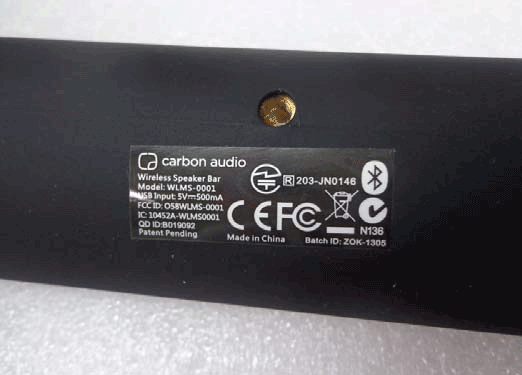
GIS Inspection checks the FCC label and product marking on Bluetooth speakers before shipment to help ensure compliance with U.S. market requirements.
Also known as the FCC label or the FCC mark, it is a certification mark employed on electronic products manufactured or sold in the United States which certifies that the electromagnetic interference from the device is under limits approved by the Federal Communications Commission.
By the regulation, the FCC DoC certification mark is mandatory for devices classified under Part 15 (IT equipment like computers, switched-mode power supplies, monitors etc., television receivers, cable system devices, low-power transmitters, unlicensed personal communication devices) and Part 18 (industrial, scientific and medical (ISM) devices that emit RF radiation) of the FCC regulations.
Why FCC compliance is important for products entering the U.S. market
FCC compliance is important for manufacturers, importers, distributors, and retailers because it supports:
- Legal market access in the United States
- Product safety and electromagnetic compatibility
- Reduced risk of customs delays
- Lower risk of product recalls
- Improved customer confidence
- Better supply chain compliance management
- Non-compliant products may be:
- Detained by U.S. Customs and Border Protection (CBP)
- Refused entry into the United States
- Removed from the market
- Subject to financial penalties
Which Products Require FCC Certification?
Many consumers electronic products require FCC authorization.
Examples include:
Wireless Products
- Wi-Fi routers
- Bluetooth speakers
- Wireless headphones
- Smart watches
- Wireless keyboards and mice
- Security cameras
Communication Devices
- Mobile phones
- Tablets
- GPS devices
- Two-way radios
- Wireless microphones
Smart Home Products
- Smart plugs
- Smart lighting
- Smart thermostats
- Smart doorbells
- IoT devices
Digital Devices
- Computers
- Monitors
- Printers
- Power supplies
- Household appliances
Note: The applicable authorization procedure depends on the device classification.
Types of FCC Authorization
FCC Certification
- Products with intentional radio transmitters
- Typical examples
Supplier's Declaration of Conformity (SDoC)
- Applicable products
- Testing requirements
Which FCC Approval Does Your Product Need?
- Comparison table
- Certification vs SDoC
The FCC equipment authorization framework consists primarily of two approval pathways.
FCC Certification
This is the most stringent authorization process and applies to products that intentionally transmit RF signals.
Examples include:
- Wi-Fi devices
- Bluetooth devices
- Mobile phones
- Wireless transmitters
- Smart home products
Products require:
- Testing by an FCC-recognized laboratory
- Review by a Telecommunication Certification Body (TCB)
- Assignment of an FCC ID
Supplier’s Declaration of Conformity (SDoC)
SDoC applies to products that do not intentionally transmit RF signals but may generate electromagnetic emissions.
Examples include:
- Computers
- Monitors
- Power supplies
- LED lighting products
- Household appliances
Under SDoC:
- No FCC ID is issued.
- The responsible party maintains compliance documentation.
- Testing is still generally required.
FCC Certification Process
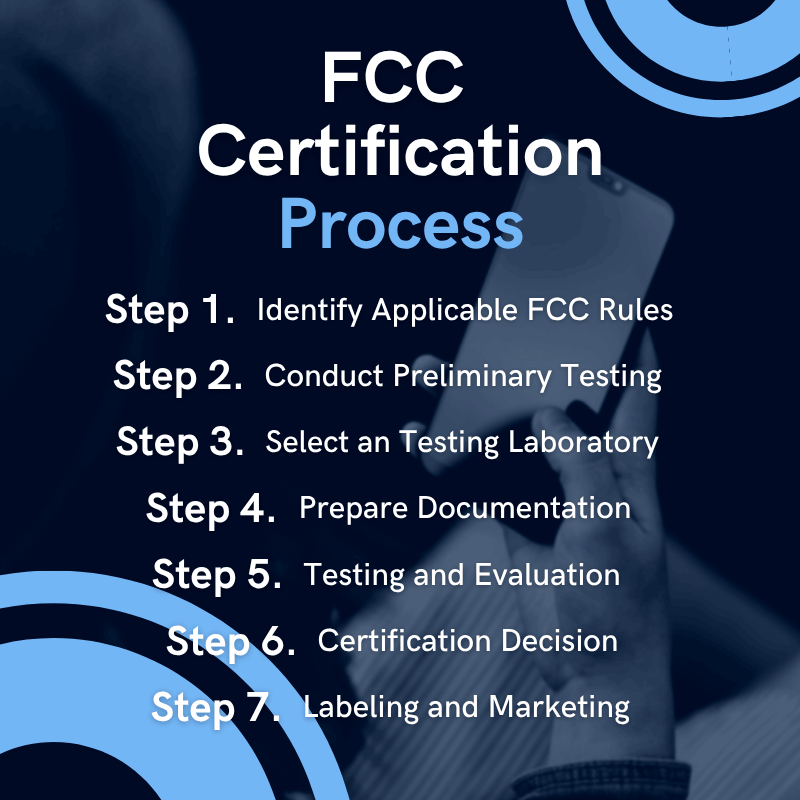
The typical FCC certification process includes the following 7 steps:
Step 1: Identify Applicable FCC Rules
Determine the specific FCC rules (often Part 15) that apply based on frequency, power, and intended use.
Step 2: Conduct Preliminary Testing
Before formal tests, consider pre-compliance checks to catch emission issues early—especially since changes in product design can impact how a pre-certified module behaves.
Step 3: Select an Accredited Testing Laboratory
Choose a reputable lab familiar with FCC testing protocols. They will guide you on necessary tests and help confirm that your device meets all requirements.
Step 4: Prepare Documentation and Submission Materials
Compile detailed schematics, photographs, user manuals, and other documentation. This ensures the lab and Telecommunication Certification Body (TCB) fully understand your product’s final configuration.
Step 5: Testing and Evaluation
Products must undergo testing in accredited laboratories to measure their electromagnetic emissions and ensure compliance with FCC regulations. The testing evaluates whether the product meets the required limits for EMI/RFI emissions. The required testing typically includes:
- Emission Testing: Radiated Emissions: Measures the electromagnetic energy emitted by the product into the air, conducted in an anechoic chamber to ensure emissions are within FCC rules.
- Conducted Emissions: Assesses electromagnetic interference emitted through power cords using a line impedance stabilization network (LISN).
- Immunity Testing (for certain products): Electrostatic Discharge (ESD) Immunity: Tests the product’s resistance to static electricity discharges.
- Radiated Immunity: Ensures the product operates correctly when exposed to electromagnetic fields.
- Spurious Emissions: Measures emissions at frequencies outside the primary operating range to ensure they are below allowable limits.
- Harmonic Emissions: Assesses emissions at harmonics of the fundamental frequency to ensure compliance with FCC limits.
- AC Power Line Conducted Emissions: Measures the emissions conducted along the AC power lines to ensure they fall within the acceptable limits.
- Unintentional Radiators (Part 15 Subpart B): Tests ensure that devices not intended to emit RF signals do not exceed emissions limits specified by the FCC.
- Intentional Radiators (Part 15 Subpart C): For devices designed to emit radio frequency signals, testing ensures compliance with the specific limits and conditions of FCC rules.
If results show any non-compliance, modifications may be required, followed by re-testing until the device meets FCC standards.
Step 6: Certification Decision
The TCB reviews the lab’s test reports and your documentation. Once it confirms full compliance, your product gains FCC certification.
Step 7: Labeling and Marketing
After successful testing, the product must be labeled with an FCC ID number to ensure all required user notices and guidelines are included. With certification in hand, your product is ready for the U.S. market.
Key FCC Standards and Technical Requirements
FCC Part 15
FCC Part 15 is the most widely applicable regulation and covers unlicensed RF devices.
Requirements include:
- Radiated emission limits
- Conducted emission limits
- Frequency band restrictions
- Spurious emission limits
FCC Part 18
FCC Part 18 applies to Industrial, Scientific, and Medical (ISM) equipment such as:
- Microwave ovens
- RF heating equipment
- Industrial RF generators
FCC Parts 22, 24, and 27
These regulations apply to licensed communication devices such as:
- Cellular products
- Wireless communication systems
- Licensed transmitters
FCC Part 2
FCC Part 2 establishes:
- Equipment authorization procedures
- Filing requirements
- Labeling requirements
- Application procedures
FCC RF Exposure Requirements
Certain wireless devices must also comply with RF exposure requirements.
Depending on the product, evaluations may include:
Specific Absorption Rate (SAR)
Typically required for products used close to the human body.
Examples:
- Mobile phones
- Smart watches
- Tablets
Maximum Permissible Exposure (MPE)
Applies to products operating at greater separation distances.
Examples:
- Wi-Fi routers
- Access points
- Industrial transmitters
RF exposure testing can significantly affect certification costs and timelines.
FCC Labeling Requirements
Proper labeling is an essential compliance requirement.
Incorrect or missing labels may lead to customs issues or regulatory violations.
FCC ID Label
Certified devices must display:
- FCC ID
- Permanent marking or electronic labeling
- Legible and durable identification
SDoC Labeling Requirements
Products using SDoC must include:
- FCC compliance statement
- Responsible party information
- U.S. contact information
Additional Requirements
Labels should:
- Be durable
- Be accessible without disassembly
- Match packaging and documentation
Conclusion for FCC Certification
FCC authorization determines whether an electronic product can legally enter the U.S. market. Compliance should be integrated into product design, validated through accredited testing, and supported by complete technical documentation.
Understanding FCC requirements, costs, and timelines helps manufacturers and importers reduce regulatory risks and improve market access for consumer electronics.
FAQs
1. What is FCC Certification?
FCC certification refers to the approval process required for certain electronic devices that emit radio frequency energy and must comply with FCC regulations before being sold in the United States.
2. Which products require FCC certification?
Products that intentionally transmit RF signals, including Wi-Fi devices, Bluetooth products, and mobile phones, generally require FCC Certification.
3. Is FCC Certification mandatory?
Products that generate or emit radio frequency energy and fall within FCC regulations must comply before entering the U.S. market.
4. What is an FCC ID?
An FCC ID is a unique identifier assigned to products that complete the FCC Certification process.
5. When FCC Certification is Required?
FCC authorization is required when:
- The product will be sold, imported, marketed, or distributed in the U.S.
- The device includes any form of wireless transmitter
- The device contains a pre-certified wireless module (the host product may still need testing)
- The device contains digital electronics, even if not wireless
- You use third-party manufacturers or private labeling to produce the product
- You change an existing certified design enough to affect RF performance
If you are unsure, the safest rule is to assume that if it emits RF energy, FCC rules apply and the device requires certification or an SDoC to enter the market in the United States.
GIS Inspection
GIS Inspection (General Inspection Services), established in 2005 and headquartered in China, is an CNAS 17020, ISO 9001, and AQSIQ accredited third-party agency. We specialize in comprehensive quality control inspection and supply chain solutions for global buyers. By deploying a dedicated team of 100% full-time professional inspectors, GIS Inspection ensures peak integrity and technical consistency. Today, we are the trusted quality partner for over 12,000 global brands.
Email: lisaliu@gis-inspection.com