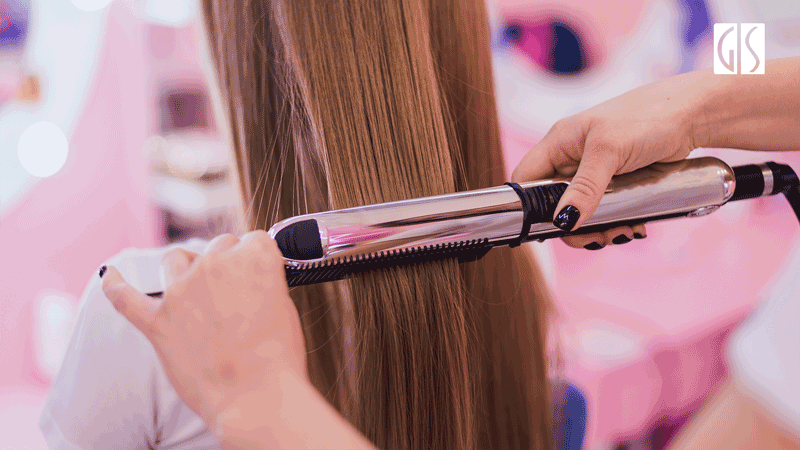
Sourcing hair curlers, hair straighteners, hair crimpers, hair setters, and hot air brushes from China and Asia?
Consumers expect these hair style tools to be safe, durable, and high-performing, but even minor defects that fails to meet quality and safety standards, it can result in returns, recalls, and reputational.
In this article, we will discuss the three quality control method, inspection checklists, safety standard, and most common hair styling tool quality defects.
Hair Styling Tools Quality Control Method
Hair style appliances are subject to strict restrictions, such as RoHS, CE Marking, EMC Directive, CCC, and WEE, as the products are intended for use by end-consumers. Due to the nature of the industry, with production often taking place in various factories, quality control can be challenging.
To ensure compliance with specifications, safety, and regulatory requirements, a well-defined quality control strategy is crucial for sourcing and manufacturing hair style tools.
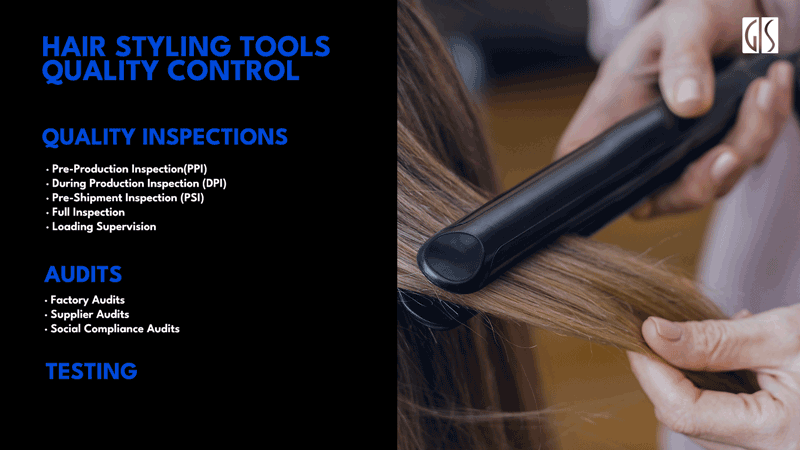
Hair Styling Tools Quality Inspections
Performing hair styling tools inspection, the inspectors will evaluate the quality of electronic appliances using a checklist covering key areas such as workmanship, specifications, functionality, and safety. As well as check the product’s compliance with UL, CE Marking, and other industry standards and conformity markings.
- Pre-Production Inspection(PPI): Ensure that your manufacturer has the resources and capabilities to meet your product specifications and quality requirements, and assess the materials’ durability before production begins.
- During Production Inspection (DPI): Monitor the production process to ensure the products meet your standards and identify and resolve any sources of defects or areas for production that require improvement.
- Pre-Shipment Inspection (PSI): Inspect a sample of the products based on the Acceptable Quality Limit to verify the products meet your requirements, including visual inspection, quantity check, labelling and packaging, workmanship, function, and safety of the product.
- Full Inspection: Check the performance of each appliance in the batch according to a range of variables, including functionality, safety, and craftsmanship.
- Loading Supervision: Monitor the packaging and loading process to ensure that your products are packed and shipped correctly.
Hair Styling Tools Audits
In addition to inspections, Third-party quality inspection company also offers auditing services for hair straightener, hair curler, hot air brush, hair crimper, and hair setter, including:
- Factory Audits: Assess the manufacturer’s quality control systems, machinery, facilities, and production capability.
- Supplier Audits: Verify the legitimacy of your supplier and assess their quality management systems and export capabilities.
- Social Compliance Audits: Assess the company’s operations based on globally recognized compliance benchmarks.
Testing for Hair Styling Tools
The laboratory can perform complete testing and certification services for hair styling tools, such as safety testing, RoHS compliance testing, carton drop testing, internal construction review, CE marking certification, and many more.
Hair Styling Tools Inspection Checklists
To ensure safety, durability, and compliance, hair styling tools must undergo comprehensive quality control check before shipment. These tests help to prevent defects, reduce product failures, and meet global regulatory requirements.
Below are the comprehensive checklists conducted during third-party inspections to verify the performance, safety, and reliability of hair styling appliances.
1. Packing checking
Packing Check verifies that the hair styling tools is properly packed to prevent damage during transportation and storage.
The inspection covers the gift box (if applicable), carton, and pallet, checking packaging materials, sealing, strapping, appearance, and overall condition. Inspectors also verify that all labels, including barcodes, logos, product markings, shipping marks, and logistics information, are accurate, legible, and correctly applied according to customer and shipping requirements.
2. General Workmanship Check
General Workmanship Check verifies the overall manufacturing quality, appearance, and assembly of the hair styling tools. It includes checking for scratches, dents, cracks, deformation, stains, poor painting or coating, rust, sharp edges, loose or missing parts, and assembly defects.
Inspectors also verify safety and certification labels, confirm the product matches approved specifications, ensure there are no foreign objects or sanitary issues.
3. Electrical safety Tests
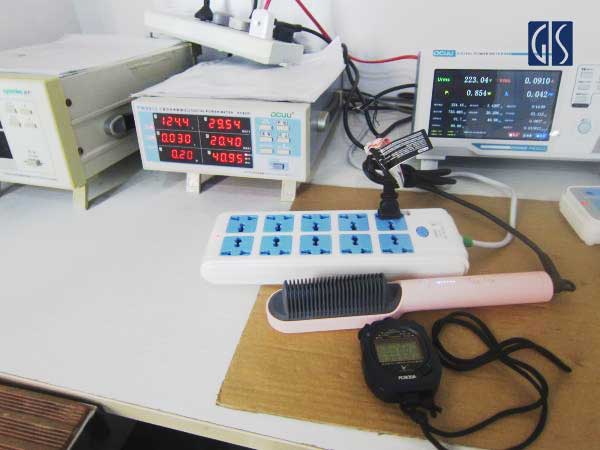
GIS Inspection conducts a power consumption test on an Amazon FBA hair straightening brush in China to verify electrical safety, product performance, and compliance before shipment.
Electrical safety is critical in hair styling appliances, as faulty wiring or insulation failures can lead to electric shocks, fire hazards, or malfunctions. Several tests verify compliance with international safety standards.
3.1 Power on check
Verify that the hair styling tool operates safely and continuously under rated operating conditions without overheating, malfunction, or electrical failure.
The good condition samples should be operating at full load (preferable) at least 4 hours at rated voltage or time reference the user instruction if less than 4 hours. After testing, the samples should pass the high voltage check, function check, earth continuity check etc., and no defect found.
3.2 Earth continuity test (if applicable)
Ensure the protective earthing circuit provides a reliable low-resistance path to prevent electric shock.
For European markets:
- luminary product: at least 10A for 1 second applied and the resistance should be not more than 0.5 ohm.
- other household products: 25A for 1 second applied and the resistance should be not more than 0.1 ohm.
For USA/CANADA markets:
- 25A for 1 second applied and the resistance should be not more than 0.1 ohm.
3.3 Power cord strain relief test
Verify that the power cord remains securely attached and prevents damage to internal electrical connections during normal use.
IEC standard:
- Pull on the cord for 25 times.
- Force according to product weight.
UL standard:
- Pull on the cord for 35 lb for 1 minute.
3.4 High voltage test
Confirm the insulation system can withstand the specified high voltage without electrical breakdown or leakage.
Conduct the test for 1 second (5mA) at the required voltage.
- USA/Canada: 1200Vac
- Europe:
- Class I: 1000Vac
- Class II: 2500Vac
- Transformer/Adaptor:
- Europe: Class I 2100V / Class II 4200V
- USA/Canada: 1200V
No insulation breakdown.
3.5 Internal workmanship and critical component check
Verify that internal wiring, insulation, and critical components are correctly assembled and comply with approved construction requirements.
Check internal construction and critical components according to CDF or CCL.
3.6 Unit drop test
Evaluate whether the product maintains electrical and mechanical safety after accidental drops during normal consumer use.
Drop the unit with power cord connected.
- IEC: 5 drops from 70 cm
- UL: 3 drops from 36 inches
No safety hazards, exposed live parts or insulation failure.
3.7 Overheat protection check (for hot air output item)
Verify that the thermal protection system automatically prevents overheating and eliminates fire or burn hazards.
Operate at rated voltage and block the air inlet/outlet until thermostat trips automatically.
The thermal fuse shall not burn out and no flame, melting or deformation shall occur.
3.8 Lock motor check
Confirm that the motor protection system safely responds to a stalled motor condition without causing overheating, fire, or electrical hazards.
Operate at rated voltage and lock the motor until the protection device activates.
No ignition, flame, molten parts or exposed live parts shall occur.
3.9 Temperature check
Verify that the heating surface operates within the specified temperature range and does not exceed safety limits during normal operation.
Operate at rated voltage at the highest heat setting.
Measure barrel/heating plate temperature after stabilization.
Temperature shall comply with specifications and safety requirements.
3.10 Resistance to heat and fire
Non-metallic enclosures for heating elements and live parts, air intake and air
exhaust guards and grilles (whether decorative or not) and supports for electrical
components shall comply with the requirements of 5 VA from CAN/CSA-C22.2 No. 0.17.
Materials having flame-retardant coatings, liners, or coverings shall comply with
the flame-retardant coating requirements in CAN/CSA-C22.2 No. 0.17, except for
the flexing and surface resistivity tests.
3.11 Stability and mechanical hazards test
Appliances, other than fixed appliances and hand-held appliances without a charging stand, intended to be used on a surface such as the floor or a table, shall have adequate stability. Hand-held appliances with an integral rest shall have adequate stability when placed on the integral rest. Compliance is checked by the following test, appliances incorporating an appliance inlet being fitted with an appropriate connector and flexible cord. Hand-held appliances are subjected to the test while placed on their charging stand or integral rest.
4. Functional Tests
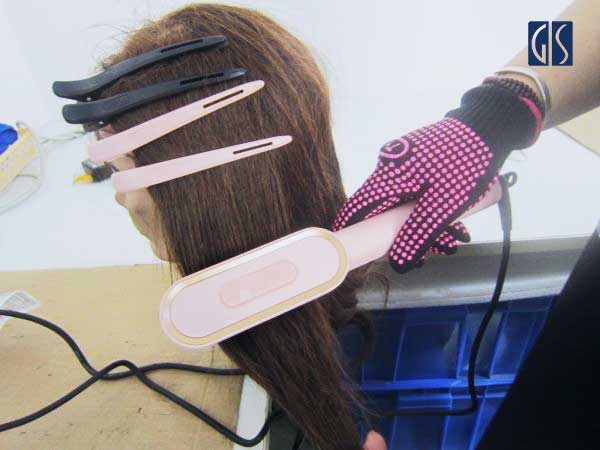
GIS Inspection performs a functional test on an Amazon FBA hair straightening brush to verify heating performance, temperature control, and overall product functionality before shipment.
4.1 Assembly / installation check
Should be assembled/installed smoothly according to the instruction manual.
4.2 Full function check
Check all claimed functions including switches, knobs, settings, display and actual operating performance.
4.3 Power consumption check / Input power / Current check
Must comply with product specification and safety standards.
4.4 Battery compartment fitness check (if applicable)
Battery compartment shall properly fit the specified batteries and function correctly.
4.5 Battery voltage check (if applicable)
Battery voltage shall comply with specification.
4.6 Motor speed check
Record motor speed in the inspection report.
4.7 Red point check on heating element
Operate at rated voltage.
The ready indicator shall change from red to black when the heating barrel or plate reaches operating temperature.
5. Other Tests
5.1 Transportation drop test
No critical & Major issue found on package & product after (10 times) drop test according to the standard of ISTA 1A.
5.2 Product Size / Power cord length / Weight Measurement
According to product spec or approved sample. Apply +/-3% if no detail tolerance issued or requirement from client
5.3 Bar code scan check
Barcode shall be scannable and correct.
5.4 Coating adhesive tape test
Use 3M 600 (or same performance tape) tape for an adhesion test on all painting, foil stamping, UV coating, printing. no more than 10% area peel off required.
5.5 Rubbing test for rating label and printing
Rub the rating label for 15 seconds with water, then for 15 seconds with petroleum spirits.
Hair Styling Tools Safety Standards
Hair styling tools such as hair curlers, hair straighteners, hair crimpers, hair setters, and hot air brushes must comply with safety standards and l regulations before entering international markets.
- IEC 60335-1 Household and Similar Electrical Appliances – Safety – Part 1: General Requirements
- IEC 60335-2-23 Household and Similar Electrical Appliances – Safety – Part 2-23: Particular Requirements for Appliances for Skin or Hair Care
This International Standard deals with the safety of electric appliances for the care of skin or hair of persons or animals and intended for household and similar purposes, their rated
voltage being not more than 250 V.
This standard recognizes the internationally accepted level of protection against hazards such
as electrical, mechanical, thermal, fire and radiation of appliances when operated as innormal use taking into account the manufacturer's instructions.
Examples of appliances that are within the scope of this standard are
– curling combs;
– curling irons;
– curling rollers with separate heaters;
– facial saunas;
– hairdryers;
– hand dryers;
– heaters with detachable curlers;
– permanent-wave appliances
- CE (Conformité Européenne) – Required for products sold in the European Union (EU), the CE mark certifies that a hair styling tool meets EU safety, health, and environmental standards.
Common Reasons Hair Styling Tools Fail Quality Inspections
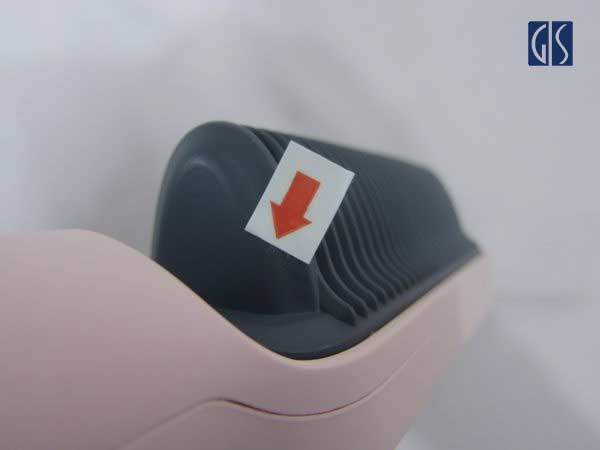
A visible cosmetic scratch on the primary handle surface, failing the Grade A surface aesthetic requirements for Amazon FBA.
Here are the most common reasons that hair styling tools fail quality inspections:
1. Electrical Safety Failures
Hair styling tools with faulty electrical components pose serious risks, including fire hazards and electric shocks. Common electrical failures include:
- Wiring issues – Loose or poorly soldered connections can cause short circuits or malfunctions.
- Overheating risks – Appliances that fail temperature rise tests can overheat, leading to fire hazards or component damage.
- Insufficient insulation – Faulty insulation exposes live wires, increasing the risk of electrocution or sparks.
2. Material Defects
Inferior materials may affect the product's durability, safety, and compliance. Some frequent issues include:
- Substandard plastics – Inferior plastics may warp under heat, release toxic chemicals, or break easily. Non-food-safe plastics that fail FDA or LFGB tests are a major compliance issue.
- Low-grade metal components – Weak metals can lead to corrosion, rusting, or structural failures. Stainless steel should be corrosion-resistant and free from heavy metals like lead or cadmium.
3. Functional Defects
Hair styling appliances must function consistently and efficiently. Performance-related failures include:
- Inconsistent Heating Performance – The hair styling tool fails to reach or maintain the specified temperature, resulting in uneven heating and poor styling performance.
- Switch or Control Malfunction – Power buttons, temperature controls, or mode selectors do not respond properly or fail during operation, affecting normal product use.
- Weak Airflow or Motor Performance (Hot Air Brush) – The motor produces insufficient airflow, unstable rotation speed, excessive noise, or vibration, reducing drying and styling efficiency.
4. Poor Workmanship
Manufacturing defects often result from poor assembly, weak structural integrity, or careless finishing. Common quality issues include:
- Loose screws and weak joints – Weak assembly can cause parts to detach or break under normal use.
- Uneven surfaces or misaligned components – Poorly molded plastic parts and misaligned buttons, knobs, or lids affect functionality and aesthetics.
5. Labeling and Packaging Non-Compliance
Hair style tools must meet packaging and labeling regulations to ensure consumer safety and legal compliance. Issues that lead to failures include:
- Incorrect or missing safety warnings – Labels must include proper voltage, wattage, and safety instructions in compliance with local laws (e.g., CE, UL, FCC).
- Lack of multilingual instructions – Many countries require product manuals in multiple languages for consumer accessibility.
- Weak or non-secure packaging – Inadequate packaging can lead to damage during transit, increasing return rates.
GIS Inspection Hair style tools Inspection Services in China and Asia
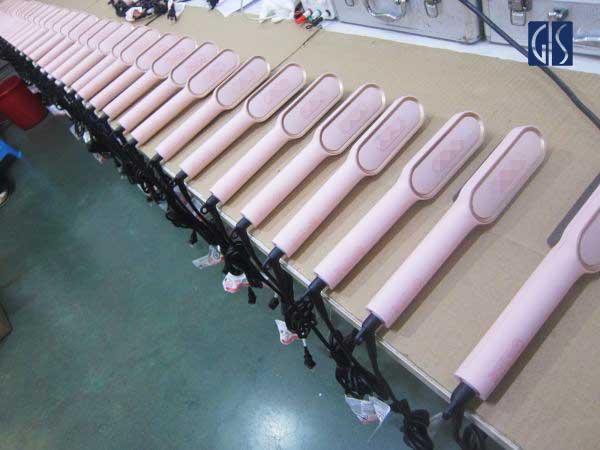
GIS inspector is conducting hair straighteners inspection in a factory in China
Improve the quality of your hair style appliances to meet your high standards with General Inspection Services’ comprehensive quality control solutions tailored to the home appliances industry.
General Inspection Service (GIS Inspection) has over two decades of experience and is trusted by companies worldwide to deliver electronics quality control solutions. We have a team of highly skilled employees and offer electronics quality control services such as quality inspection, testing, and certification for all household appliances and Appliances for Skin or Hair Care, including hair straightener, hair curler, hot air brush, hair crimper, hair setter, and more.
By working with GIS Inspection, brands, retailers, and Amazon FBA sellers can confidently deliver high-quality hair style tools that meet international standards, ensuring a strong market presence and customer satisfaction.
Get in touch with GIS today to schedule your hair styling appliance inspection.
GIS Inspection
GIS Inspection (General Inspection Services), established in 2005 and headquartered in China, is an CNAS 17020, ISO 9001, and AQSIQ accredited third-party agency. We specialize in comprehensive quality control inspection and supply chain solutions for global buyers. By deploying a dedicated team of 100% full-time professional inspectors, GIS Inspection ensures peak integrity and technical consistency. Today, we are the trusted quality partner for over 12,000 global brands.
Email: lisaliu@gis-inspection.com