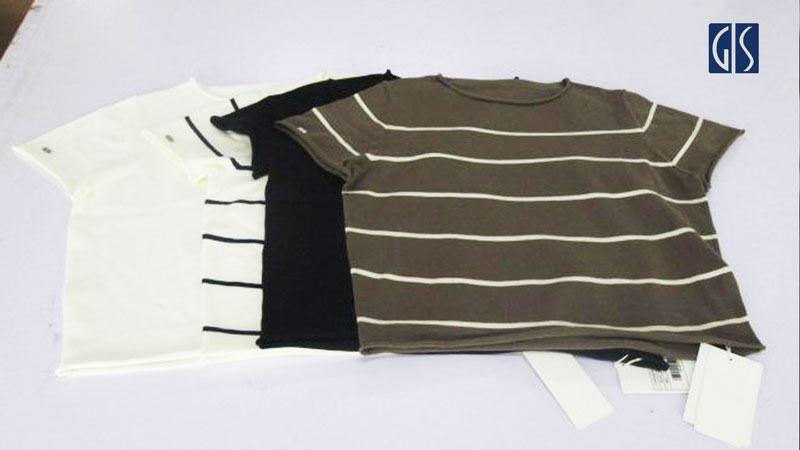
Buying T-Shirts from China and concerned that your manufacturer may not always produce garments that meet your quality standards? Managing quality and compliance in the apparel industry can be challenging. Garment production is labor-intensive, so there is more opportunity for human error.
Of course, any reputable factory you work with should have internal quality control measures. Implementing your own independent quality control process, including third-party inspection, can provide an additional layer of protection.
In this guide, GIS Inspection explains the T-shirt quality inspection process, key inspection checklist items, common garment defects, and AQL sampling.
Content
Why Is T-Shirt Quality Inspection Important?
It is the key step for manufacturing and supply chain process, ensuring that your T-shirt meet quality, safety, and compliance standards. Below are some key reasons why third-party T-shirt inspection important:
- Ensures Product Quality: T-shirt inspection verifies that garments meet specified standards for design, material, construction, and functionality.
- Protects Brand Reputation: Third-party inspection helps maintain Apparel Brand’s by preventing the release of defect products that could damage trust and ensuring compliance with market standards to safeguard reputation.
- Improves Operational Efficiency: T-shirt inspection conducted at various stages of production enables early problem identification, reducing costs and delays by minimizing rework and providing feedback for process improvement.
T-shirt Quality Inspection Process
1. Review Order Details & Specifications
- Review the purchase order, product specifications, and inspection requirements before going on-site.
- Confirm the inspection scope, sampling requirements, and client expectations.
2. Verify Production & Order Quantity
Verifying the order quantity matters, because a pre-shipment inspection generally requires 80% of the order be packaged at the time of inspection. An in-process inspection is scheduled around 30-50% complete.
- Verify the total quantity available at the factory.
- Confirm the quantity that has been:
- Packaged and labeled
- Completed but not yet packaged
3. Determine the Sampling Plan
If the available quantity meets the client's requirements, the inspector selects samples randomly. ANSI/ASQ Z1.4 is commonly used as the sampling standard. For T-shirts, the sampling plan should be agreed upon in advance.
Sampling may consider:
- Different sizes
- Colors
- Styles
- Other product variations
Note: Clients may choose to combine these variables and allocate the total sample size proportionately. Individual sampling by size, color, or style can increase inspection and reporting time, so supplier history, product risk, and inspection cost should also be considered.
4. Check Packaging & Labeling
Inspect the packaging and product labeling of selected samples, including:
- Barcodes
- Product labels
- Carton markings
- Carton dimensions
- Carton weight
- Packaging integrity
- Conduct packaging tests such as drop testing when required.
5. Conduct Visual & Workmanship Inspection
Compare the selected samples against the approved product specifications and inspection requirements. Check overall appearance, workmanship, and cosmetic quality. Identify and record any defects found during inspection.
Typical checks may include:
- Fabric and color consistency
- Sewing quality
- Stitching and seams
- Printing or embroidery
- Labels and accessories
- Overall appearance
5. T-shirt Inspection On-site Test
- Lot shading
- Metal Detection
- Product Dimension Measurement
- Fabric weight
- Fastener Reliability Test (Products with snap, button, zipper, velcro etc.)
- Stuffing Material Screening
- Barcode Verification
- Carton Assortment Checking
- Carton Drop Test
- Carton Dimension and Weight Measurement
- Fitting check
T-shirt Quality Inspection Checklists
A comprehensive T-shirt inspection checklist can cover the following areas.
|
Inspection |
Typical Checks |
|
General Appearance |
style, size, material, design, pattern, and color; dirt, oil stains and other foreign matter. |
|
Workmanship |
Check inner and outer surfaces of the product for manufacturing attributes such as sewing/stitching, embroidery, pressing, threads, holes, alignment and attachment of components, etc. |
|
Color |
Check products for color, color shading, discoloration, color transfer, and surface texture/finish differences within a product. |
|
Touch & Feel |
Check if the fabric and other materials have the same feel or “hand” as the approved samples. |
|
Attachments and Accessories |
Check the quantity, style, size, design, color, and method of attachment, alignment, quality & strength of attachment. |
|
Labeling/Printing/Marking |
Check that the correct labels/hangtags are present in the specified locations and are attached in the specified manner. Check and record all labels found on the products. |
|
Packing |
|
Common T-Shirt Defects Found During Inspection
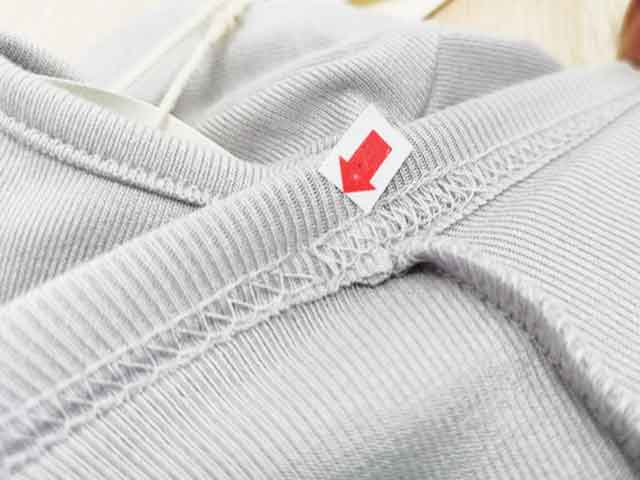 Broken Stitch Defect Found on a Long-Sleeve T-Shirt During Inspection in China
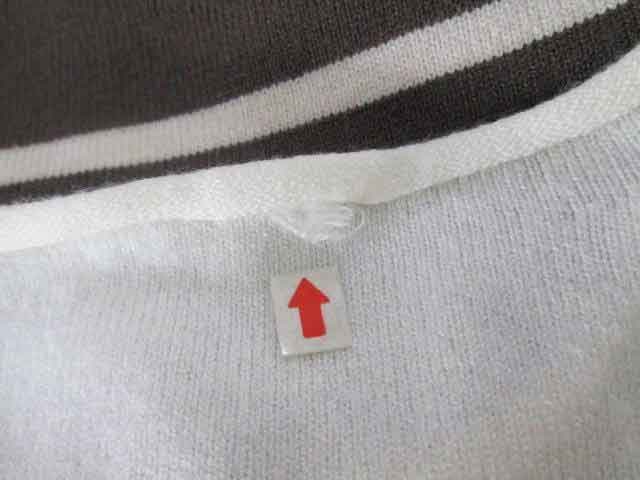 Uncut thread end Defect Found on a Long-Sleeve T-Shirt During Inspection in China
Garment defects can occur at any production stage, from raw materials to finished products. Understanding the common types of defects is essential to identify them during quality control inspections.
1. Fabric Defects:
- Color variations: These can occur due to dye lot variations or inconsistencies in the dyeing process. Identifying color variations during quality control inspections is crucial to ensure that all garments in a batch have consistent colors.
- Dirty Mark: Stains on fabric can occur during manufacturing or transportation. These can be caused by oil, dirt, or other substances. Inspectors should check for stains and remove them before the garment is shipped.
- Holes: Holes in the fabric can be caused by snags, tears, or damage during production or transportation. Identifying these defects and either repairing them or removing the affected garments from the shipment is essential.
- Snags: Snags occur when threads are pulled out of the fabric, creating a loop. This can happen during production or wear. Identifying and repairing snags is crucial, as they can lead to further tearing or damage to the garment.
2. Construction Defects:
- Broken stitches: Broken stitches can occur when the sewing machine needle breaks or the thread tension is incorrect. This can lead to loose seams or even holes in the garment. Identifying broken stitches and repairing them before shipping the garment is crucial.
- Misaligned seams: Misaligned seams occur when the pieces of fabric need to be sewn together correctly, resulting in uneven seams. This can make the garment look unprofessional and affect its fit. Inspectors should check for misaligned seams and correct them before shipping.
- Untrimmed/uncut thread end: Loose threads can occur when the thread is not trimmed correctly after sewing. These threads can become tangled and create a messy appearance. Inspectors should perform yarn inspection and cut them before shipping the garment.
3. Sizing Defects:
- Incorrect measurements: Incorrect measurements can occur when the pattern or template used to cut the fabric must be corrected. This can result in a garment being too big or too small. Identifying sizing defects and adjusting the pattern or removing the affected garments from the shipment is essential.
- Inconsistent sizing: Inconsistent sizing can occur when different garment parts have varying measurements. Inconsistent sizing might affect the fit and comfort of the garment. Inspectors should check for inconsistent sizing and ensure that all aspects of the garment meet the required standards.
4. Appearance & Finishing Defects:
- Poor ironing: Poor ironing can leave the T-shirt with visible wrinkles, uneven surfaces, or an untidy appearance. This may occur when the garment is not properly pressed during finishing. Inspectors should check the overall appearance of the garment and ensure that it is properly ironed before packing and shipment.
- Pleated marks: Pleated marks are unwanted fold lines or pressed marks that remain on the fabric after ironing, folding, or handling. They can be particularly noticeable on the front, back, sleeves, or other visible areas of the T-shirt. Inspectors should check for unwanted pleated marks and confirm that garments have a smooth and acceptable appearance.
- Wrinkle marks: Wrinkle marks are visible creases or irregular lines that remain on the garment after production, ironing, or packaging. Excessive or permanent wrinkles can affect the appearance and perceived quality of the T-shirt. Inspectors should check the garment surface and identify significant wrinkle marks during the visual inspection.
T-Shirt AQL Inspection and Defect Classification
Approximately 80% of GIS clients choose AQL sampling inspection for T-shirt quality control. AQL sampling provides a practical and systematic way to evaluate the quality of a large production lot without inspecting every garment.
For T-shirt orders, inspectors randomly select samples from the finished production according to the agreed sampling plan, typically based on ISO 2859-1 or ANSI/ASQ Z1.4. The selected samples are then checked for workmanship, appearance, measurements, labeling, packaging, and other specified quality requirements.
Table: AQL inspection chart in apparel industry
|
Quantity in delivery |
Sample size |
Acceptable quality level |
|||
|
2.5 |
4.0 |
||||
|
|
|
Accept |
Reject |
Accept |
Reject |
|
2-8 |
2 |
0 |
1 |
0 |
1 |
|
9-15 |
3 |
0 |
1 |
0 |
1 |
|
16-25 |
5 |
0 |
1 |
0 |
1 |
|
26-50 |
8 |
0 |
1 |
1 |
2 |
|
51-90 |
13 |
1 |
2 |
1 |
2 |
|
91-150 |
20 |
1 |
2 |
2 |
3 |
|
151-280 |
32 |
2 |
3 |
3 |
4 |
|
281-500 |
50 |
3 |
4 |
5 |
6 |
|
501-1200 |
80 |
5 |
6 |
7 |
8 |
|
1201-3200 |
125 |
7 |
8 |
10 |
11 |
|
3201-10000 |
200 |
10 |
11 |
14 |
15 |
|
10001-35000 |
315 |
14 |
15 |
21 |
22 |
GIS T-Shirt Inspection Case
- Client: Colombia
- Product: T-Shirts
- Total Order Quantity: 5,592 pcs
- Sampling Method: AQL Single Sampling
- Inspection Level: Normal Level II
- Sample Size: 200 pcs
- Sampling Method: Random sampling
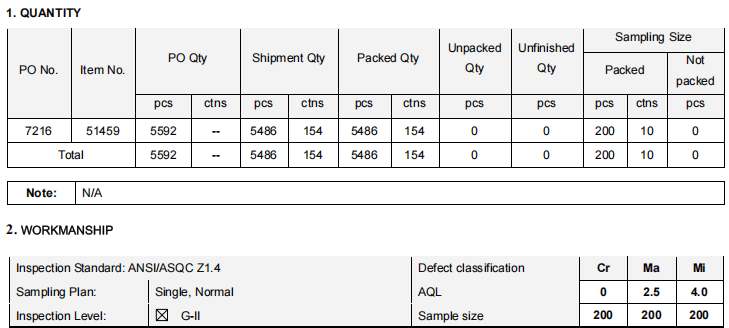
Result: GIS randomly selected 200 T-shirts from the production lot and inspected them against the client's specifications and agreed quality requirements.
Defects are typically classified as:
- Critical defects: a defect likely to result in a hazardous or unsafe condition for an individual using the product or fails to meet mandatory regulations.
- Major defects: a defect that is likely to result in failure, reduce the usability & salability and can easily be detected by the customer.
- Minor defects: a defect that does not reduce the usability of the product, can be noticed only after careful examination and may reduce the salability. A workmanship defect beyond the defined quality standard.
The inspector records the quantity and type of defects found and compares the results with the agreed acceptance criteria.
GIS T-Shirt Inspection Services
GIS Inspection (General Inspection Services) provides specialized third-party quality control solutions for T-shirt and casualwear manufacturing across China and Asia. Combining ANSI/ASQ Z1.4 (ISO 2859-1) AQL sampling with soft-line technical expertise, GIS ensures shipments meet dimensional, visual, and safety criteria before leaving the factory.
GIS Quality Inspection for T-shirt
GIS Inspection offers comprehensive quality assurance services to T-shirt worldwide, including:
Quality Control Inspections
- Pre-Production Inspections
- During Production Inspections
- Pre-Shipment Inspections
- Container Loading Inspections
Learn more the details of: The 4 Types of Quality Inspection: A Complete Guide for Importers
Factory Inspection & Supplier Audit
GIS performs the following types of factory and supplier audits:
- Factory Audit
- Supplier Audit
Detailed T-Shirt Inspection Reports
After the inspection, GIS provides a detailed report containing:
- Production and quantity information
- Sampling details
- Measurement results
- Defect findings
- AQL results
- Test results
- Packaging findings
- Clear photographs
This allows buyers to understand the actual quality of their T-shirt production before deciding whether to release the shipment.
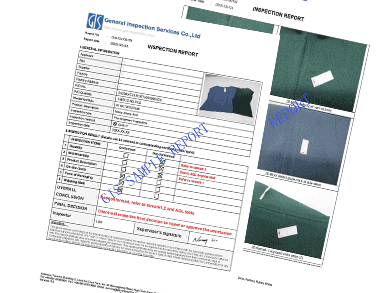
Download the T-shirt Sample Report
See a real example of how GIS Inspection evaluates t-shirt quality, measurements, workmanship, testing, and packaging.
Nationwide T-shirt Inspection Coverage in China
GIS Inspection has developed a comprehensive nationwide office and inspection network across China, with local offices strategically located in key manufacturing regions, including Fuzhou, Guangzhou, Shenzhen, Dongguan, Shantou, Shanghai, Xiamen, Ningbo, Hangzhou, Suzhou, Jiangsu, Qingdao, Tianjin, Jinan, Zhengzhou, and Hong Kong.
Why Choose GIS for T-Shirt Inspection?
With professional apparel inspectors and experience in textile and garment quality control, GIS helps buyers identify quality problems before shipment rather than after the products reach the market.
GIS benefits:
- Only full-time inspectors but part-time or freelancers are used, less bribery risks;
- Service rate starts from $150/Man-day all-inclusive in China’s major manufacturing regions;
- Inspection reports delivered within 24 hours after the inspection;
- Dedicated account manager and customer service 24/7.
Conclusion
General Inspection Service (GIS Inspection) is the leading 3rd party quality control inspection service agency in China. We have been fully accredited by CMA, ISO 9001, CNAS17020, and AQSIQ. Preparing early and partnering with a trusted third-party inspection agency (like GIS Inspection) is the best insurance policy for your clothing supply chain.
Contact GIS Inspection today to schedule your pre-shipment inspection and secure your spot!
T-shirt Inspection FAQ
Q1. What AQL should I use for garment inspections?
To reduce risk before accepting a shipment, AQL sampling is a practical and effective approach to undertake quality assurance on an order of produced items. Generally, for T-shirt, random inspection AQL standard is normally 1.5/2.5 for major defects, 4.0 for minor defects.
Q2. What are the most common defects found in T-shirt inspections?
The most common defects include: fabric faults (holes, stains, shade variation, pilling), stitching issues (skipped stitches, broken threads, puckering, uneven seams), measurement deviations outside tolerance.
GIS Inspection
GIS Inspection (General Inspection Services), established in 2005 and headquartered in China, is an CNAS 17020, ISO 9001, and AQSIQ accredited third-party agency. We specialize in comprehensive quality control inspection and supply chain solutions for global buyers. By deploying a dedicated team of 100% full-time professional inspectors, GIS Inspection ensures peak integrity and technical consistency. Today, we are the trusted quality partner for over 12,000 global brands.
Email: lisaliu@gis-inspection.com