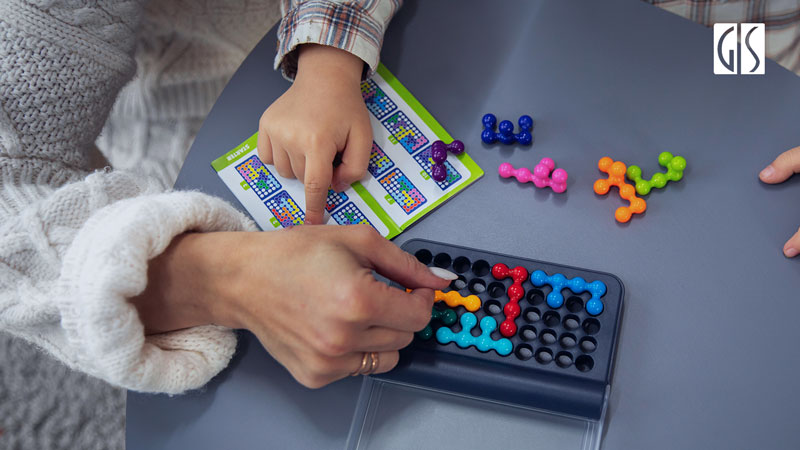
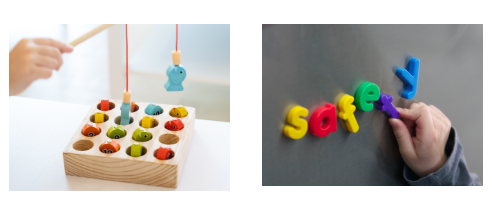
Magnets can be dangerous to children if swallowed. Many toys can have magnets attached or embedded in the toy. Small, strong magnets can be used inside toys to attach parts or to make toys stick to other play objects.
The Consumer Goods (Toys Containing Magnets) Safety Standard 2020 sets out the mandatory requirements for children’s toys containing magnets.
Toys containing magnets must comply with the relevant sections of one of the following 4 standards:
- Australian and New Zealand standard AS/NZS ISO 8124.1:2019 Safety of toys Part 1: Safety aspects related to mechanical and physical properties
- European standard EN 71-1:2014+A1:2018 Safety of toys - Part 1: Mechanical and physical properties
- International standard ISO 8124-1:2018 Safety of toys – Part 1: Safety aspects related to mechanical and physical properties
- US standard ASTM F963 - 17 Standard Consumer Safety Specification for Toy Safety.
Toys containing magnets mandatory standard
The mandatory standard sets design and construction requirements to prevent a child from accessing small magnets. This includes testing to make sure a magnet won’t separate from the toy during play.
- The mandatory standard sets out requirements for the design, construction and warning information for children’s toys containing magnets.
- The purpose of the standard is to reduce the risk of serious injury or death from children swallowing small high-powered magnets.
- The standard applies to new toys for children under 14 with one or more magnets or magnetic components.
- The standard sets design and construction requirements to prevent a child from accessing small magnets.
- Warnings must accompany magnetic or electrical experimental sets with loose, small high-powered magnets intended for children 8 years and older.
Note: The only toys allowed to contain loose, small high-powered magnets are magnetic or electrical experimental sets intended for children 8 years and over.
Products the mandatory standard applies to
The mandatory standard applies to toys that are supplied:
- new and are designed or intended for use in play by a child under 14 years old
- with one or more magnets or magnetic components.
Complying with the mandatory standard
Design and construction
The mandatory standard sets design and construction requirements to prevent a child from accessing small magnets. This includes testing to make sure a magnet won’t separate from the toy during play.
The only toys allowed to contain loose, small high-powered magnets are magnetic or electrical experimental sets intended for children 8 years and over.
Warning requirements
The mandatory standard sets out warning requirements to accompany magnetic or electrical experimental sets with loose, small high-powered magnets intended for children 8 years and older.
These warnings alert parents and carers to the risk of swallowing small hazardous magnets.
Toys for children up to and including 36 months of age mandatory standard
The mandatory standard, the Consumer Goods (Toys for Children up to and including 36 Months of Age) Safety Standard 2023 :
- The mandatory standard was created to reduce the risk of small parts releasing or coming off toys during play or after reasonable wear and tear.
- It applies to toys for children up to and including 36 months of age that are manufactured, designed, labelled and marketed as playthings.
- It sets out requirements for design, construction and testing.
Products the mandatory standard applies to
The mandatory standard applies to toys for children up to and including 36 months of age which have been:
- manufactured
- designed
- labelled
- marketed as playthings.
Toys for children up to and including 36 months of age include but are not limited to:
- rattles, toy dummies, teethers, and squeeze toys
- toys for attaching to cots, playpens, prams and strollers
- push and pull toys
- pounding toys
- blocks and stacking toys
- bath toys
- rocking, spring and stick horses and figures
- musical chime toys
- jack-in-the box
- stuffed, plush and flocked animals and figures
- dolls
- toys with pompoms
- games and puzzles
- toy cars, trucks and other vehicles.
Complying with the mandatory standard
Some toys for children up to and including 36 months of age may also need to comply with other applicable mandatory standards and bans.
Testing
To make sure toys for children up to and including 36 months of age comply, suppliers should organise testing through specialist testing laboratories.
Design and construction
Toys for young children can come in many shapes, forms and materials. The toy itself and any parts of it that can come off must not be smaller than a certain size. This is because children under 36 months of age tend to place small parts into their mouths and can choke on or swallow them.
A small parts cylinder (31 mm in diameter and 57 mm long) is used to check if a small part is likely to be a choking or swallowing hazard. Manufacturers must make sure their toys comply with the mandatory standard.
Battery operated toys
In June 2022, 4 button battery safety and information standards became mandatory for all products that contain button or coin batteries. These standards apply to both button or coin batteries and products containing button or coin batteries. The Consumer Goods (Toys for Children up to and including 36 Months of Age) Safety Standard 2023 places specific requirements on toys which contain batteries.
The mandatory standard requires all battery operated toys for children up to and including 36 months of age to have the battery compartment secured so that it can only be accessed by using a tool. This is because children up to 36 months of age can swallow small parts.
Labelling
Even if toys are labelled or marketed for older children, the mandatory standard may still apply. It could apply if the toys are commonly recognised as being intended or suitable for children under 36 months of age.
The mandatory standard gives some guidance on appropriate ages for using toys, referencing official United States age determination guidelines by the US Consumer Product Safety Commission (CPSC) (PDF).
Magnetic Toys Quality Control Inspection
“2 Jun 2026, ACCC issues takedown requests to Amazon, eBay, Kogan and Fruugo for toys and games containing potentially deadly small magnets.
As Australia continues to strengthen safety requirements for magnetic toys, importers, retailers, and manufacturers must ensure that products fully comply with applicable regulations and safety standards before entering the market.
Effective quality control throughout the production process is essential to reduce compliance risks, prevent costly recalls, and protect consumers from potential hazards associated with small, powerful magnets.
General Inspection Service (GIS Inspection) is leading 3rd party quality control inspection and quality assurance service agency in China. We have been fully accredited by CAM, ISO 9001, CNAS17020, and AQSIQ. We provide a comprehensive toys QC service including product quality inspection services, container loading supervision, supplier management and development, lab testing and more.
GIS Inspection provides a highly specialized approach to toys quality control, with dedicated engineering teams focusing on the toys categories and requirements.
Our QC teams cover most regions in China as well as many other three Asian countries including Vietnam, Malaysia, and India. Get in touch with us to learn more about quality control for toys.
GIS Inspection
GIS Inspection (General Inspection Services), established in 2005 and headquartered in China, is an CNAS 17020, ISO 9001, and AQSIQ accredited third-party agency. We specialize in comprehensive quality control inspection and supply chain solutions for global buyers. By deploying a dedicated team of 100% full-time professional inspectors, GIS Inspection ensures peak integrity and technical consistency. Today, we are the trusted quality partner for over 12,000 global brands.
Email: lisaliu@gis-inspection.com