According to UN Comtrade data published through the World Bank WITS, China is one of the world's leading exporters of glass bottles and containers, exported approximately US$3.04 billion worth of products under HS Code 701090, in 2024.
This makes China a major sourcing market for glass packaging used in food and beverage, pharmaceuticals, cosmetics and personal care, chemicals, and other. Glass Bottles and Containers
Content
Why Is Quality Inspection Important for Glass Bottles and Containers?
Glass bottles and containers are widely used in beverages, medicines, packaged foods, and skincare products. Because glass is fragile and quality variations can affect safety, functionality, and appearance, inspection is an important part of supplier quality control.
- Identify Glass Defects: Inspection helps identify cracks, chips, air bubbles, impurities, scratches, flow marks, uneven thickness, deformation, stains, and other workmanship defects before shipment.
- Control Packaging and Transportation Risks: Glass products are fragile, so packaging and handling are important parts of quality control. Inspection can verify whether the inner and outer packaging provides the required protection and whether cartons, labels, shipping marks, and packaging quantities conform to the agreed requirements.
- Reduce Quality and Sourcing Risks: Third-party inspection provides an independent assessment of production quality. Identifying problems before shipment can help buyers avoid costly rework, replacement, returns, and delivery delays.
Glass Bottles and Containers Inspection Procedures
In most cases, a pre-shipment inspection is performance to meet requirements of the buyers. A glass bottle and container pre-shipment inspection typically cover appearance and workmanship, dimensions and weight, functional and performance checks, safety-related requirements, and packaging and labeling.
The inspection scope is based on the buyer’s specifications, approved samples, product requirements, and applicable inspection standards. When no specific requirement is provided, the Glassware inspection protocol uses ANSI/ASQC Z1.4 sampling with General Inspection Level II and AQL 0 for critical, 2.5 for major, and 4.0 for minor defects.
Quantity Check
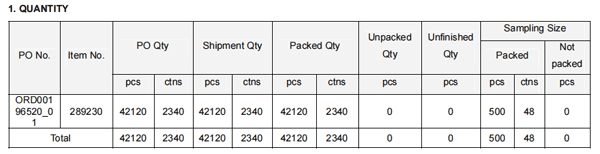
Discrepancies in batch quantities can cause confusion, delays, and inventory tracking issues. The inspection team conducts a thorough count and cross-checks of glassware ready to be delivered against purchase order documentation.
They compare the shipment’s quantity to the specified order quantity, ensuring precise alignment between the two. This meticulous process guarantees accurate documentation and facilitates smooth inventory management.
Appearance & Workmanship Inspection
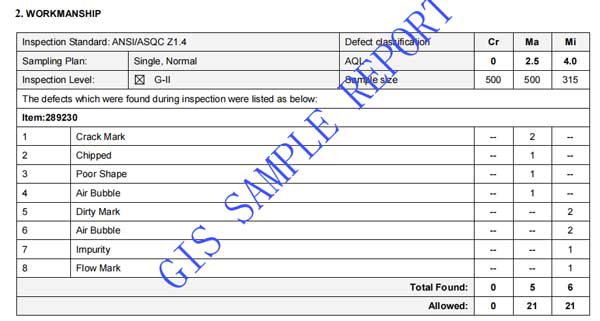
The inspection can include checking the glass surface, opening, body, base, handle and other components against the approved sample, product specifications, photos, or client requirements.
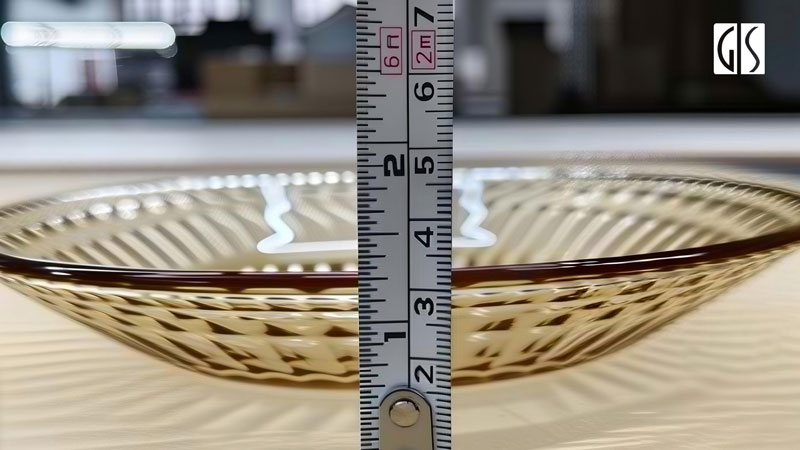
Dimensions Measurement
Dimensions and physical specifications are checked against the purchase order, product specification, approved sample, or other agreed requirements. Depending on the product, measurements may include overall dimensions, opening dimensions, component dimensions, and weight.
On-site Test
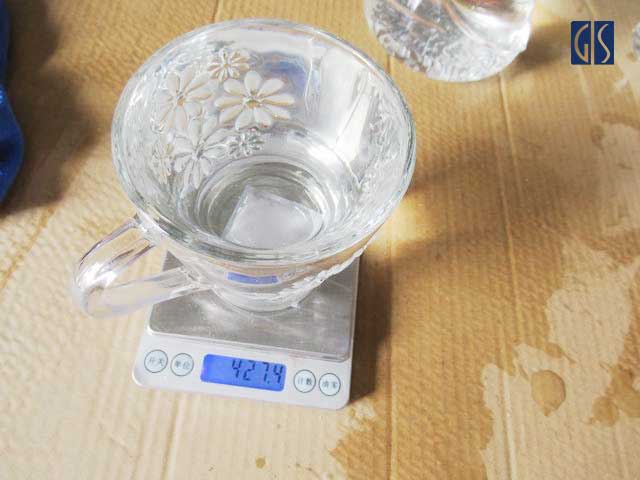 capacity test for glass cups Inspection in China
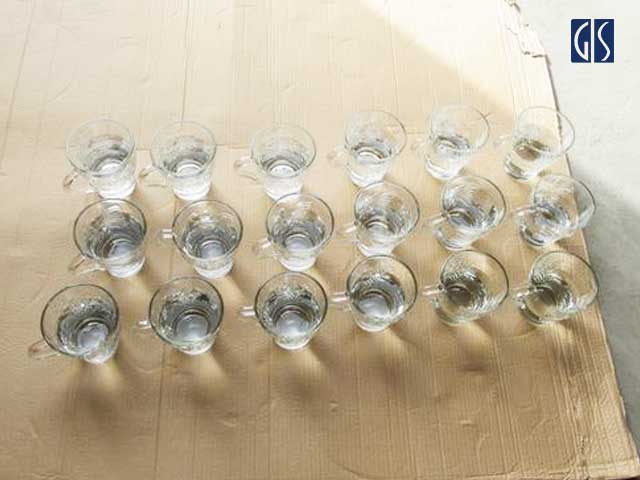 water leakage test for glass cups Inspection in China
- Basic function check: Verify that the glass bottle, container, or tableware performs its intended function.
- Capacity / Volume check: Measure the actual capacity or volume and compare it with the claimed or specified capacity. GIS inspection reports include capacity checks as an on-site inspection item.
- Leakage test: Check whether the product leaks during use or after the applicable test.
- Stability check: Where applicable, fill the product with water and check its stability on an inclined surface.
- Thermal shock check: For applicable glassware, conduct the specified hot/cold water test and check for breakage, cracking, or leakage.
- Handle strength check: For products with handles, apply the specified load and check for breakage, cracking, or detachment.
- Microwave oven check: For applicable microwave-safe products, check for cracking, melting, deformation, lose or overheated handles, according to the applicable requirement.
- Transportation drop test: Where applicable and agreed with the client, perform the specified carton/product drop test and check for breakage, damage, or malfunction. The Glassware WI references ISTA 1A for the transportation drop test.
- Barcode scan check: Verify that barcodes are readable and correspond to the correct printed numbers.
- Coating / printing adhesion test: Where applicable, check the adhesion of painting, foil stamping, UV coating, or printing using the specified tape test.
Packaging & Labeling Inspection
- Check the inner and outer packaging against the approved packaging requirements.
- Verify shipping marks, carton markings, country of origin, required warnings, and other labeling information according to client and destination-market requirements.
- Check packaging for damage, stains, moisture, insecure sealing, incorrect packaging method, or missing packaging materials.
Quality Inspection Criteria for Glass Bottles and Containers
From evaluating the chemical, physical and mechanical properties to ensuring the material companies and product manufacturers follow the glassware standard for the correct fabrication and treatment procedures. We’ve listed a couple of quality control glass standards that you should be aware of below.
- ASTM C1036: ASTM C1036 covers the quality requirements of flat, transparent, clear, and tinted glass. This glass is intended to be used primarily for architectural glazing products including: coated glass, insulating glass units, laminated glass, mirrors, spandrel glass, or similar uses.
- EN ISO 7459:2004: Glass containers - Thermal shock resistance and thermal shock endurance - Test methods (ISO 7459:2004)
- ISO 12775:1997: The International Organization for Standardization (ISO) developed guidelines for types of glassware and its composition in normal bulk production and outlined details of the inspection and test methods inside the 12775:1997 standards
Common Defects in Glass Bottles and Containers Inspection
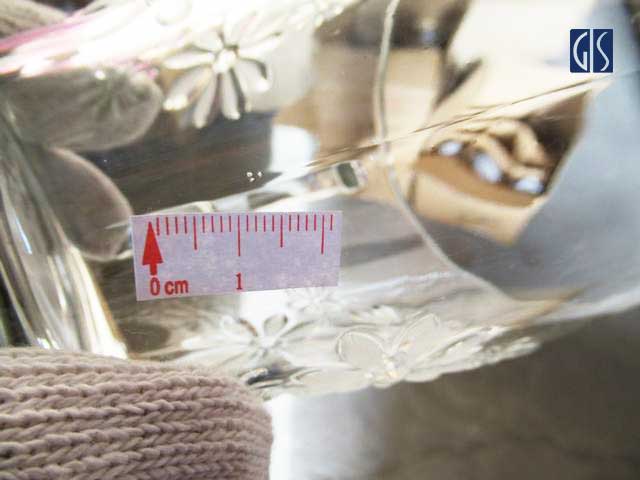 Air Bubble Defect Found on Glass Cups During Inspection in China
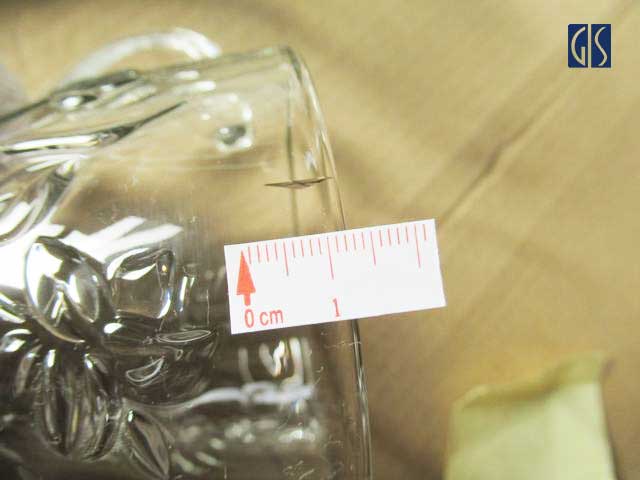 Crack Mark Defect Found on Glass Cups During Inspection in China
The most common glass defects you should be aware of include: bubbles, holes, shards, smears, and dents.
GIS Services for Glass Bottles and Containers Inspection in China
GIS Inspection (General Inspection Services) provides specialized third-party quality control solutions for glass bottles and containers manufacturing across China and Asia. Combining ISO 2859-1(ANSI/ASQ Z1.4) AQL sampling with hard-goods technical expertise, GIS ensures shipments meet dimensional, visual, and safety criteria before leaving the factory.
GIS Quality Inspection for Glass Bottles and Containers
GIS Inspection offers comprehensive quality assurance services in China to glass products worldwide, including:
Quality Control Inspections
- Pre-Production Inspections
- During Production Inspections
- Pre-Shipment Inspections
- Container Loading Inspections
Learn more the details of: The 4 Types of Quality Inspection: A Complete Guide for Importers
Factory Inspection & Supplier Audit
GIS performs the following types of factory and supplier audits:
- Factory Audit
- Supplier Audit
Common Types of Glass Bottles and Containers GIS Specializes in Inspecting
GIS General Inspection Services provides China quality inspection services for a wide range of glass packaging products:
Food & Beverage
- Beverage, water, juice, wine, and beer bottles
- Sauce, oil, and vinegar bottles
- Food, jam, honey, pickle, and spice jars
- Food storage containers
Pharmaceuticals
- Medicine and syrup bottles
- Tablet and capsule bottles
- Dropper bottles
- Vials and ampoules
- Pharmaceutical glass containers
Cosmetics & Personal Care
- Cosmetic and perfume bottles
- Essential oil, lotion, and serum bottles
- Cream jars
- Personal care product containers
Chemicals
- Chemical bottles
- Reagent bottles
- Chemical storage bottles
- Sample bottles
- Laboratory glass containers
Other Applications
- Household glass containers
- Storage jars
- Glass containers with lids
- Specialty glass bottles and container
Detailed Glass Bottles and Containers Inspection Reports
After the inspection, GIS provides a detailed report containing:
- Production and quantity information
- Sampling details
- Measurement results
- Defect findings
- AQL results
- Test results
- Packaging findings
- Clear photographs
This allows buyers to understand the actual quality of their glass bottles and containers production before deciding whether to release the shipment.
Nationwide Glass Bottles and Containers Inspection Coverage in China
GIS Inspection has developed a comprehensive nationwide office and inspection network across China, with local QCs strategically located in key manufacturing regions, including:
Zhejiang: Hangzhou, Ningbo, Wenzhou, Huzhou, Shaoxing, Jinhua, Quzhou, Taizhou;
Guangdong: Guangzhou, Shenzhen, Dongguan, Foshan, Huizhou, Shantou, Zhongshan;
Jiangsu: Wuxi, Suzhou, Nantong, Yancheng, Lianyungang;
Fujian: Fuzhou, Putian, Sanming, Quanzhou, Nanping, Jinjiang;
Shandong: Qingdao, Jinan, Liaocheng, Linyi;
Henan: Zhenzhou, Xinxiang, Jiaozuo, Anyang, Xinxiang, Nanyang;
Hebei: Xingtai, Langfang, Shijiazhuang, Tangshan, Baoding, Cangzhou;
Hunan: Changsha, Zhuzhou, Shaoyang, Yiyang, Benbu;
Anhui: Hefei, Wuhu, Chuzhou, Anqing, Xuancheng, Liuan;
Why Choose GIS for Glass Bottles and Containers Inspection?
With professional inspectors and experience in glass products quality control, GIS helps buyers identify quality problems before shipment rather than after the products reach the market.
GIS benefits:
- Only full-time inspectors but part-time or freelancers are used, less bribery risks;
- Service rate starts from $150/Man-day all-inclusive in China’s major manufacturing regions;
- Inspection reports delivered within 24 hours after the inspection;
- Dedicated account manager and customer service 24/7.
Conclusion
Sourcing across Asia is not without communication and language barriers, with Vietnam, India and China fast becoming a popular destination for glass manufacturing due to the low costs.
General Inspection Service is the top third-party quality control company in China. At GIS Inspection, we have over 20 years of quality assurance experience and can help you with glass inspection, pre shipment inspection, audit, and more.
Contact GIS today to book your inspection!
FAQs About Glass Bottles and Containers Inspection
Q1. What Does Glass Bottle and Container Inspection Include?
Inspection can cover appearance and workmanship, dimensions and weight, capacity or volume, on-site functional tests, packaging, labeling, and barcodes according to the product requirements.
Q2. What Common Defects Are Found in Glass Bottles and Containers?
Common defects include cracks, chips, air bubbles, impurities, flow marks, poor shape, scratches, dirty marks, deformation, and other appearance or workmanship issues.
Q3. Can AQL Sampling Be Used for Glass Bottles and Containers?
Yes. Where no specific client requirement is provided, the referenced glassware inspection protocol uses ISO 2859, Single Sampling Plan for Normal Inspection, General Inspection Level II, with AQL 2.5 for Major and 4.0 for Minor defects. Client-specific requirements take priority.
Q4. What Is the Most Popular Inspection Method for Glass Bottles and Containers?
Pre-Shipment Inspection (PSI), also known as Final Random Inspection (FRI), is one of the most commonly used inspection methods. It is normally conducted when production is completed and the goods are ready for shipment. Inspectors randomly select samples to check product quality, workmanship, dimensions, capacity, functionality, packaging, labeling, and other requirements before shipment.
GIS Inspection
GIS Inspection (General Inspection Services), established in 2005 and headquartered in China, is an CNAS 17020, ISO 9001, and AQSIQ accredited third-party agency. We specialize in comprehensive quality control inspection and supply chain solutions for global buyers. By deploying a dedicated team of 100% full-time professional inspectors, GIS Inspection ensures peak integrity and technical consistency. Today, we are the trusted quality partner for over 12,000 global brands.
Email: lisaliu@gis-inspection.com