
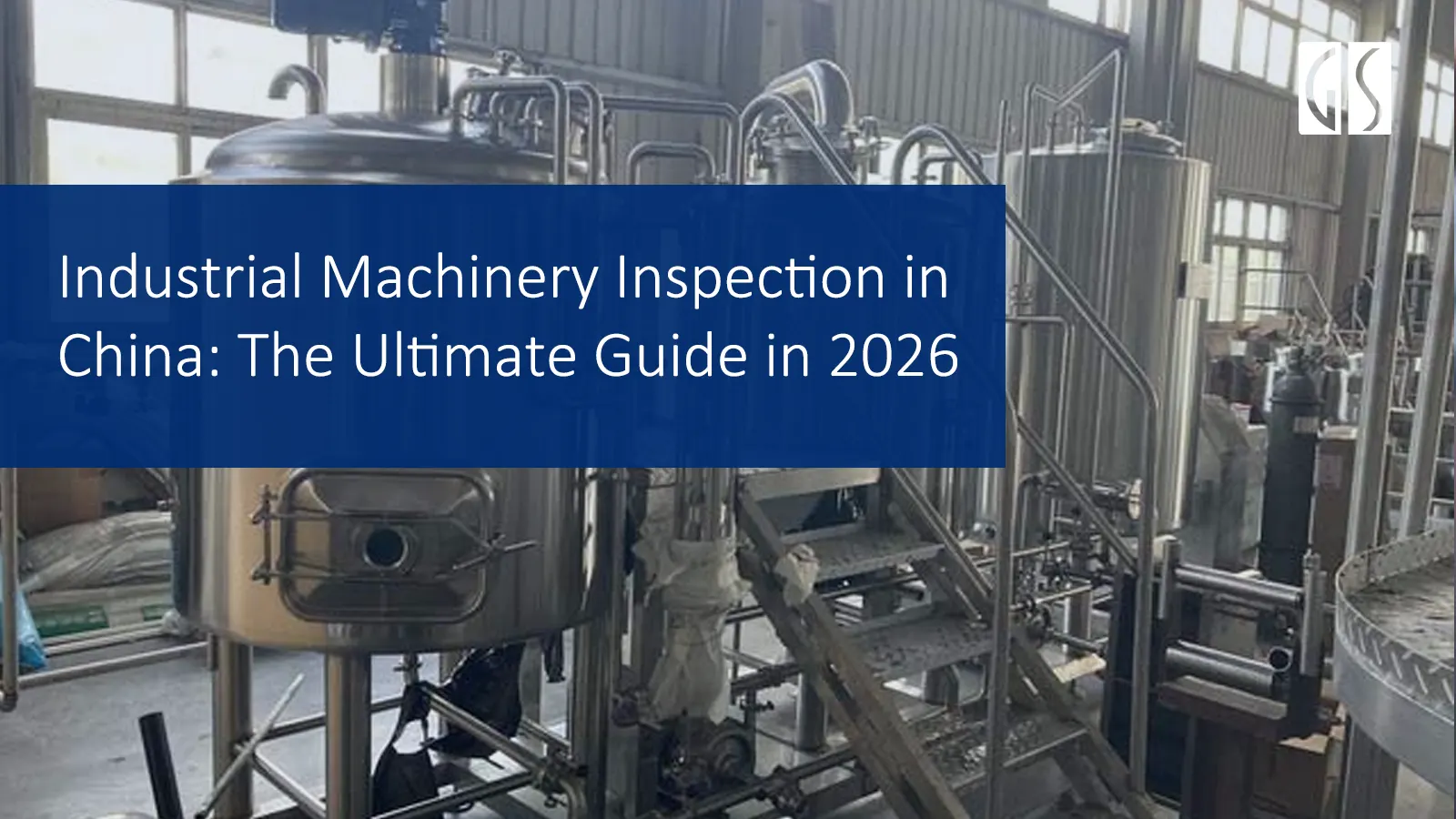
Industrial machinery Inspection is essential for any type of organization that deals with industrial equipment or machinery. General Inspection Services (GIS Inspection) provide global third-party import and export quality inspection related services for industrial machinery.
No matter if it is used excavator inspections, or for new industrial equipment, third-party inspections are vital for more than just error prevention. Comprehensive quality control represents a significant long-term cost-saving measure, as the cost of identifying issues before shipment is negligible compared to the high capital expenditure of transporting equipment overseas and encountering problems midway through a project.
This article will explore key concepts of industrial machinery quality control, from the essential aspects of industrial equipment quality inspection, including benefits, types, checklists, costs, and how to choose a reliable inspection company in 2026.
Content
What is Industrial Machinery Inspection?
Why Machinery Inspection in China matters?
Machinery Safety Standards in EU and US
Types of Inspection Services for Industrial MachineryKey Inspection Checklist for Industrial Machinery
How to Choose a Reliable Inspection Company in China
What is Industrial Machinery Inspection?
Industrial machinery inspection refers to systematic assessment, inspections, and testing of machines and mechanical systems used in industrial operations.
Industrial inspection is a core component of quality control in industries. It helps to ensure that products meet the required standards and specifications. By thoroughly inspecting raw materials, manufacturing processes, and finished products, inspectors play a key role in upholding the quality of industrial outputs.
In the industrial equipment industry, quality inspection is essential to certify that machineries from CNC machines and excavators to turbines and automated production systems, operate efficiently, meet safety standards, and comply with international quality requirements.
With thorough machine quality control inspection, the QC helps identify issues in real time, mitigate site risks, and plan further for adjustments. All the steps involved in machine inspection ensure a seamless delivery of the final product to the clients.
Why Machinery Inspection in China matters?
Machinery inspection in China is a critical step for importers, project owners, and industrial buyers who want to ensure product quality, safety, and on-time delivery.
Through industrial inspection, companies can identify and rectify defects at an early stage. This reduces the risk of producing substandard products that could damage the company's reputation and result in financial losses. Regular inspection also aids in continuous improvement by highlighting areas that require enhancement.
These inspections not only safeguard personnel and assets but also extend equipment lifespan, minimize unplanned shutdowns, and ensure compliance with international standards — delivering confidence in every operation.
Machinery Safety Standars in the EU and US
Machinery safety regulation lays down health and safety requirements for the design and construction of machinery, placed on the European and US market.
Machinery Safety Standard and Regulation (EU)
- General Product Safety Regulation (EU) 2023/988
- Machinery Directive 2006/42/EC
- Machinery safety requirements (2023)
Read the details of machinery safety standards in EU: https://www.gis-inspection.com/post/machinery-safety-standard-and-regulation-eu
Machine Safety Standards in the US
- ANSI B11 Machine Safety Standards
- ANSI/NFPA/RIA/ASME safety standards
- Applicable OSHA machine safety standards
Read the details of machinery safety standards in the US: https://www.gis-inspection.com/post/machine-safety-standards-in-the-us
Types of Inspection Services for Industrial Machinery
Industrial machinery and equipment inspections can range anywhere from simple checklists to more in-depth customized inspections, testing, and verification checklists that are based on technical engineering requirements.
The types of service may vary depending on your local regulations, complexity or size of the equipment and other relevant technical or client requirements. For those looking to import machinery from China and Asia, we’ve got a dedicated guide to importing equipment from China.
The 4 Most Common Industrial Machinery Inspection Services in China:
1. Pre-Shipment Inspection for Industrial Machinery (PSI)
The industrial machinery PSI inspection is most commonly used by importers and performed before the machinery is shipped to the customer. PSI Inspection includes checking for defects classified as minor, major, or critical based on predetermined tolerance levels.
Additionally, assessing the quality of the materials used in the product, how it has been constructed, whether its weight, color, marking, and labelling is according to the design specification. But it can also include other parts as per the clients’ quality standards, technical specifications, and contractual requirements.
Check here a sample of Pre-Shipment inspection Report for industrial Machinery (conducted by GIS for a South American client on Sponge Foam production line in China.)
2. During Production Inspection for Industrial Machinery (DPI)
The during production inspections are conducted to detect whether production is running smoothly and to prevent problems early on in the manufacturing process. The inspector would take a random sampling of semi-finished and finished products and for example evaluate the product line and timeline verification.
3. Pre-Production Inspections for Industrial Machinery (PPI)
PPI involves inspecting the quantity and quality of the raw material for the production of the equipment, and assessing whether or not the factory is ready for mass production. The purpose of a pre-production inspection is to identify quality risks before the production process begins.
4. Container Loading Check for Industrial Machinery (ClC)
Industrial equipment typically comes with a very high purchase cost. As such, businesses often order container loading services to ensure the machinery is loaded correctly and minimize the risk of mishandling. The inspector typically evaluates a variety of factors such as the condition of the container, product information, and packaging compliance.
Learn more about container loading inspection: Container Loading Inspection: A Complete Guide for Importers
Key Inspection Checklist for Industrial Machinery
A comprehensive industrial machinery inspection checklist is essential to ensure equipment quality, safety, compliant, and ready for immediate operation upon delivery. Using the case of GIS Inspection conducting a final pre-shipment inspection on customized beer production line equipment in China for a Germany client, the key inspection checklist for industrial equipment can be clearly demonstrated.
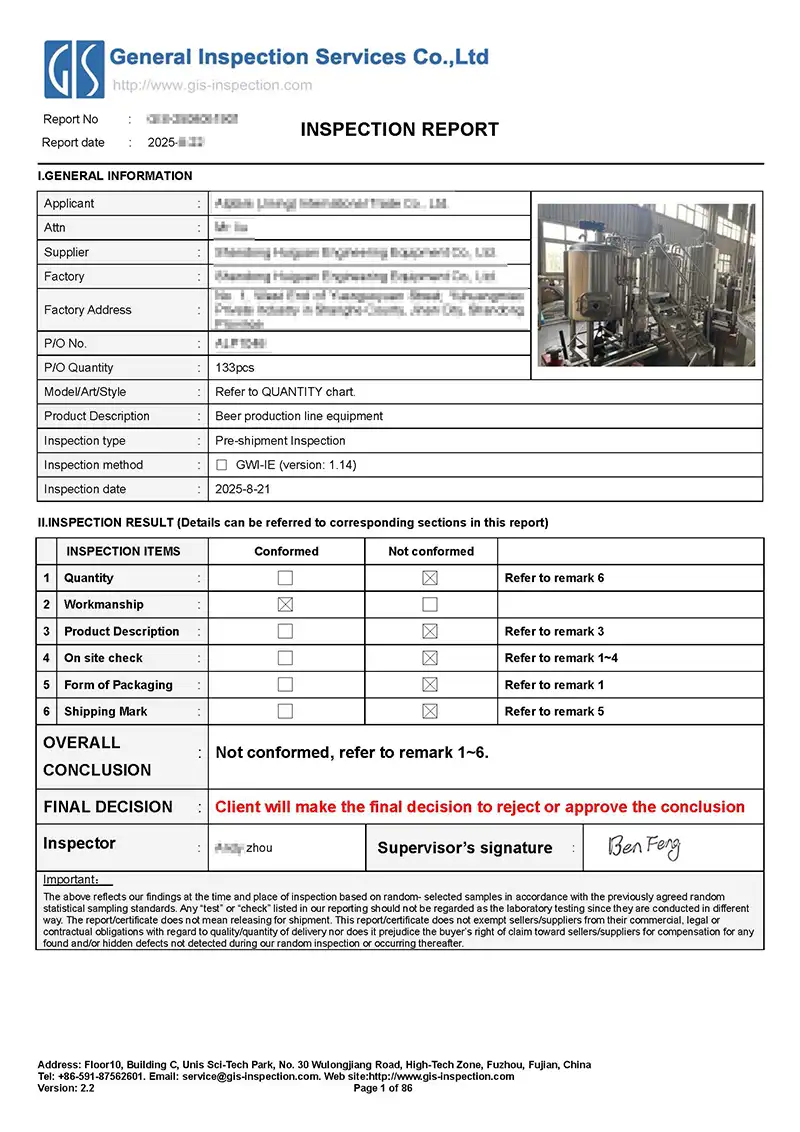
a report for pre-shipment inspection on customized beer production line equipment in China for a Germany client
Visual, Mechanical, and Electrical Examination
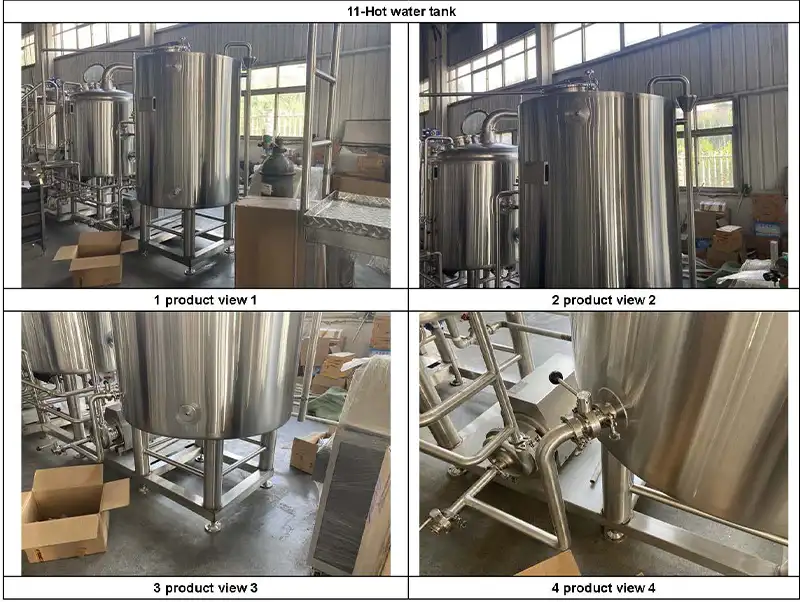
A QC expert inspector checks visually for signs of defects or machinery tear and wear. This method is one of the first steps for machinery quality control and helps to detect faulty components. Inspectors also look for signs such as cracks, corrosion, misalignments, and leaks.
Functional and Performance Testing
This approach checks for the equipment's performance level and ensures that every part of the industrial equipment system works effectively. It evaluates the operational performance of equipment under normal and simulated conditions to ensure all components function correctly.
Verification of Calibration and Safety Devices
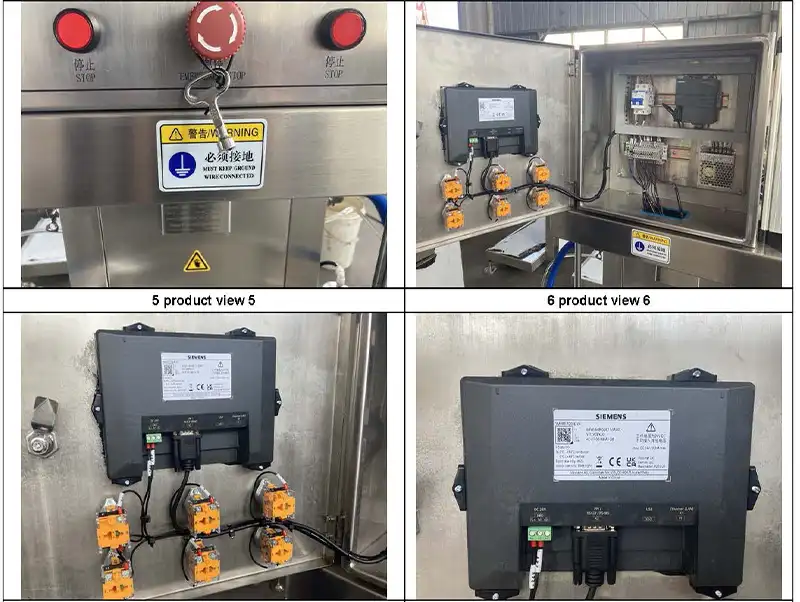
All critical instruments and safety components—including gauges, sensors, control systems, alarms, and limiters—are inspected and verified for accuracy and proper functionality. This ensures the equipment operates within safe and acceptable limits.
Dimensional Measurement
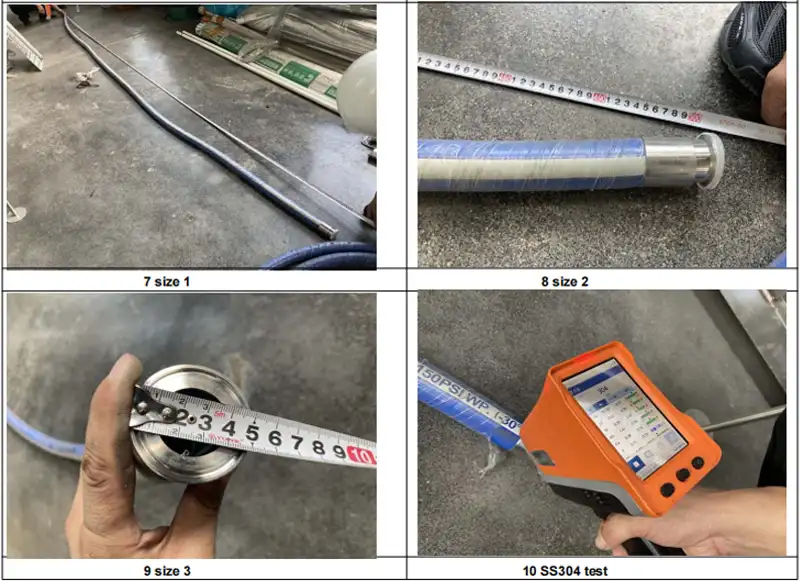
Verify that all critical dimensions of the equipment comply with technical drawings and specifications, ensuring proper fit, alignment, and installation.
Review of Maintenance Logs and Operational Records
Historical maintenance data, service records, and operational logs are reviewed to assess the equipment’s maintenance history and confirm ongoing compliance with required standards and best practices.
Need a customized Quality Inspection checklist for your next CNC machine order in China? Contact our experts today.
How to Choose a Reliable Inspection Company in China
Choosing a trusted industrial inspection service company is critical to achieving the desired outcomes. Here are some factors to consider:
- Expertise and Experience: The inspection service provider should have the necessary expertise and experience in your industry. This ensures that they can effectively identify potential issues and recommend suitable corrective measures.
- Certifications and Accreditations: The provider should hold relevant certifications and accreditations, which demonstrate their competence and adherence to internationally recognized standards. Key qualifications to look for include ISO 9001 (Quality Management System), ISO/IEC 17020 (Inspection Body Accreditation). In addition, accreditation from recognized bodies such as CNAS (China National Accreditation Service) further validates their credibility.
- Availability and Responsiveness: The provider should be readily available to conduct inspections and respond to any issues or concerns. This is particularly important in the event of emergencies or urgent situations.
- Customization and Flexibility: The provider should be able to customize their services to suit your specific needs. They should also be flexible in terms of scheduling inspections and reporting findings.
With numerous inspection companies in China, how do you choose the right one for your business? Read: List of 20 Trusted Quality Inspection Companies in China
Why Choose General Inspection Services(GIS Inspection)
General Inspection Services (GIS) offers thorough and reliable inspections for a wide range of industrial machinery, including heavy machinery, industrial equipment, factory machinery, production equipment, mechanical equipment, plant machinery.
We have professional engineering management and technical personnel responsible for such scope implementation. In addition to ISO 17020 accreditation, our inspectors also have relevant professional licenses to provide customers with independent, impartial and professional inspection services.
With our comprehensive inspections and detailed reports, you can trust that your industrial equipment is operating safely and efficiently, minimizing downtime and maximizing productivity.
Whether you need help inspecting a machinery from a supplier, or help monitoring an unloading of a container, GIS Inspection can support you.
Contact us today if you have any inquiries about industrial equipment inspections.
FAQ – Industrial Machinery Inspection in China
Q1: What types of inspections are most popular for machinery Inspection?
For industrial machinery inspection in China, pre-shipment inspections (PSI) and container loading check (CLC) are the most commonly used inspection services for industrial equipment. These inspections help buyers verify the quality, functionality, and compliance of products before shipment, effectively safeguarding both the equipment and the integrity of the supply chain.
Q2: How long does a machinery inspection take?
The duration of a machinery inspection depends on several factors, including the type of inspection, the complexity of the equipment, and the size of the shipment.
Q3: How much do Industrial Machinery Inspection services in China
Most inspection agencies offer competitive daily rates for inspectors, typically ranging from a ($200–$500/Manday, covering a full day’s work.
Q4: What are the Factors affecting inspection cost?
- Location
- Complexity
- Inspection type
Q5: Can I customize the inspection checklist?
Yes, a professional inspection company like GIS Inspection provides fully customizable inspection checklists tailored to your specific needs. Clients can define which components, functions, or safety features should be inspected, set the testing standards, choose sampling methods, and specify the reporting format.
Q6: How fast can I get the inspection report?
During the inspection, GIS inspectors provide real-time online feedback on any issues discovered. A detailed official inspection report, including the full checklist, is then delivered to the client within 24 working hours after the inspection is completed.
GIS Inspection
GIS Inspection (General Inspection Services), established in 2005 and headquartered in China, is an CNAS 17020, ISO 9001, and AQSIQ accredited third-party agency. We specialize in comprehensive quality control Inspection and supply chain solutions for global buyers. By deploying a dedicated team of 100% full-time professional inspectors, GIS Inspection ensures peak integrity and technical consistency. Today, we are the trusted quality partner for over 12,000 global brands.
Email: lisaliu@gis-inspection.com